
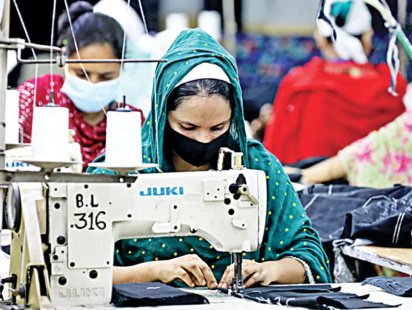


In the past twenty years, I have observed global fashion brands discussing responsible business practices such as human rights diligence, fair wages, sustainable partnerships, climate initiatives, ethical compliance, transparency, and collective accountability. As a garment manufacturer from Bangladesh, I have embraced this discourse and believe in its principles, a sentiment shared by many serious manufacturers in our country.
However, the inherent contradiction within the global garment industry lies in the fact that responsible business cannot thrive on irresponsible purchasing practices. Fast forward to 2026, and we continue to witness brands expecting suppliers to achieve the impossible by maximizing outputs while minimizing resources. Brands demand investments, documentation, audits, decarbonization, traceability, reporting, and compliance enhancements from suppliers, all while pushing for lower prices, shorter lead times, extended payment terms, and heightened flexibility. Such demands challenge the notion of a genuine partnership.
A recent report by Public Eye and Clean Clothes Campaign titled “Squeezed Dry” unveils compelling data that resonates with the longstanding experiences of many Bangladeshi manufacturers. It reveals that major buyers persist in sourcing standard cotton T-shirts at prices ranging from $2-3 per piece, with some units priced below $1 in certain market segments. Additionally, the report notes that the average import price of cotton T-shirts in the EU stood at $16 per kg in 2025, whereas imports from Bangladesh averaged around $13 per kg.
The report’s most significant revelation is the regression in real prices, where, despite a nominal increase in prices over 25 years, adjusted for inflation, buyers are actually paying approximately 30% less. In real terms, average sourcing prices have plummeted by nearly half, underscoring a concerning trend that cannot be overlooked in discussions about fair wages, ethical sourcing, and sustainable transitions.
Bangladesh has emerged as a pivotal player in this narrative, with the report indicating that 61% of T-shirts imported into the EU in 2025 were manufactured in Bangladesh. While this business has brought forth employment opportunities, foreign exchange inflows, and industrial advancement—of which we take pride—the heavy reliance on the lowest-cost production hub has also created a significant dependency, granting buyers substantial leverage. This imbalance of power means that while a factory may technically have the freedom to decline an order, commercial constraints often make it unfeasible if it aims to maintain operations and workforce stability.
Manufacturers are not seeking handouts from brands; rather, they urge buyers to recognize that a factory represents more than just a production unit listed on a balance sheet. It is an establishment that sustains livelihoods, pays wages, services loans, covers utility expenses, invests in safety protocols, environmental compliance, certifications, audits, training programs, energy efficiency, and regulatory adherence. If the garment’s pricing fails to acknowledge these realities, all discussions on responsible business practices lose their essence.
The UN Guiding Principles on Business and Human Rights mandate companies to respect others’ rights and address adverse impacts, while the OECD guidance for the garment sector stresses the importance of due diligence throughout supply chains. Low wages have been identified as a significant risk in garment supply chains, emphasizing that purchasing decisions directly impact human rights outcomes.
Setting target prices that do not accommodate compliant production costs, negotiating post-production commencement, delaying payments, demanding discounts, altering specifications belatedly, or failing to align with wage increments in the FOB price all carry repercussions that trickle down to factory margins, production intensity, overtime policies, and wage structures.
In 2026, responsible business practices have transitioned from a discretionary choice to an essential requirement for manufacturers in Bangladesh, especially in light of impending LDC graduation, stricter global regulations, and heightened expectations under EU due diligence mandates. However, for this ethos to flourish, it must be a mutually shared commitment, not an obligation imposed solely on suppliers while buyers retain the liberty to engage in purchasing behaviors that render responsible conduct unfeasible.
To a garment worker, the distinction between responsible and irresponsible business practices transcends a mere supplier code displayed on a website. It manifests in whether wages suffice for a dignified living, overtime remains manageable, work environments are secure, and factories have the capacity to invest rather than merely subsist from one order to the next. The prevalence of poverty wages in global supply chains in 2026 is a stark reality that must be addressed.
No brand can authentically advocate for human rights while perpetuating pricing structures that perpetuate poverty wages. Similarly, no retailer can genuinely champion sustainability while treating labor as the sole adjustable cost within the supply chain. True partnership cannot exist if risks are shifted downward while profits are retained upstream.
This is not an argument against competitiveness; rather, it calls for a departure from a race-to-the-bottom mentality in the industry’s competitive landscape. Fairness necessitates transparent costing and pricing models based on the actual costs of responsible production. It entails acknowledging wage increments, honoring agreed terms, and refraining from exploiting a country’s economic vulnerabilities as a bargaining chip. Buyers