
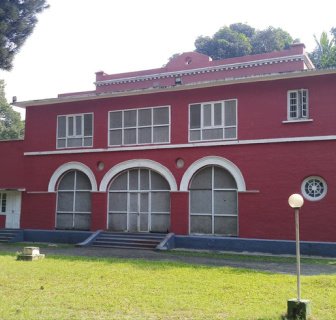


After a gap of 25 years, political engagements are poised to resume at the official residence on 29 Minto Road, a historical site typically designated for the opposition leader in parliament.
Shafiqur Rahman, the opposition leader and head of Jamaat-e-Islami, is scheduled to enter the residence to exchange Eid pleasantries with individuals from diverse backgrounds. His Eid day will commence in his constituency, Dhaka-15, where he will participate in the morning congregation at 8 am at the Monipur Girls High School playground near the 60-foot road.
Following the prayers, he is anticipated to extend greetings to local residents as stated by the party. The focal event of the day will then transition to 29 Minto Road, where a banner showcasing Shafiqur Rahman’s image has already been displayed at the entrance.
Internally, a temporary canopy has been erected to host guests, with a section of the structure sustaining damage due to a morning storm, which is promptly being rectified. Adjacent to the canopy, a stage has been assembled for the opposition leader to greet guests, while separate seating arrangements have been arranged within the building for additional visitors.
Abdul Halim, Jamaat’s assistant secretary general, mentioned that Shafiqur is looking forward to exchanging greetings with diplomats stationed in Dhaka from 11 am to 12:30 pm, followed by interactions with political figures and professionals from various fields from 3 pm to 4:30 pm.
The residence is presently undergoing refurbishment, with Shafiqur Rahman expected to relocate upon its completion, as he currently resides in the Bashundhara residential area. The century-old two-story building at Minto Road holds significant historical value beyond being a government residence, deeply intertwined with the nation’s political narrative.
In 1991, during the fifth national parliament, the dwelling accommodated Sheikh Hasina as the opposition leader. Subsequently, from 1996 to 2001, Khaleda Zia frequently utilized it as her office, transforming it into a dynamic political center teeming with party supporters and continuous operations. However, no opposition leader has inhabited the premises since 2001.
According to the Urban Study Group, a heritage organization, the vicinity surrounding Minto Road underwent transformations post the 1906 administrative expansion following the Bengal partition, as Dhaka evolved into a “civil station.” The British officials’ residences, constructed in the red brick bungalow style, dotted the Minto Road area, with number 29 emerging as a prominent example.