
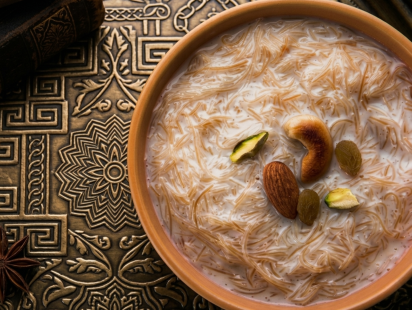


During every Eid celebration, a familiar transformation occurs where I become a mere shemai-processing entity, devoid of emotions or personal views. This experience is likely shared by many individuals fortunate enough to have encountered the same situation.
My primary duty shifts to aimlessly moving between sofas, enduring strained smiles while relatives eagerly offer me what seems like an endless supply of shemai bowls. Each relative proudly presents their version of the dish as if unveiling a cherished family heirloom.
To be honest, some of these shemais taste like they were crafted in a top-tier Michelin-starred kitchen. Served in bowls exuding love and comfort, infused with the aromas of cardamom, milk, and just the right touch of caramelized sweetness.
The initial spoonful brings solace. The issue isn’t with the first serving but rather the expectations it sets. As soon as I finish one bowl, someone magically appears beside me, mistakenly interpreting my politeness as an invitation for more: “Have another serving, it’s still warm.”
Even when I politely decline, often with a feeble “No, thank you,” it’s not taken as a final answer but as the beginning of a persuasive dialogue.
“Didn’t you like it?”
“You hardly ate anything.”
“When you were younger, you used to ask for seconds.”
Suddenly, the discourse shifts from dessert to a test of loyalty and moral integrity.
The shemai saga extends into the following day. Inquiring about breakfast options, one might be offered ruti-shemai or muri-shemai, where shemai transcends from a dish to a governing force.
By the third day, the shemai’s dominance asserts itself. The initial Eid fervor wanes, visitors decrease, and the household falls into a tranquil state. Yet, the shemai persists.
It lingers in the kitchen, a constant presence aware of its irremovable status. It reappears at every meal, almost as if it has secured a permanent spot on the dining table.
The shemai gains potency in the fridge, preparing for a showdown with my taste buds, exacerbating my palate fatigue. I lock eyes with the shemai; it gazes back, smirking as if its triumph is inevitable.
Its texture evolves over time. The warm, jovial softness of Eid morning fades away, leaving behind a denser, more resolute version after spending nights in the fridge to mature. Someone invariably claims, “It tastes even better now,” defending the dish with the assurance of a seasoned culinary expert.
I no longer bother asking if there is any shemai left; the answer is already known. It’s no longer just a dessert but a steadfast domestic institution, unwavering, quietly powerful, and challenging to question without seeming ungrateful.