
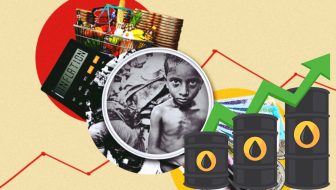


In West Agargaon, amidst the midday heat, Shahnaz Akhter haggled over the price of eggplants at a vegetable stall. Beads of sweat trickled down her forehead as the once vibrant colors of her sari had dulled. Time has changed the dynamics of her daily grocery budget, as four hundred taka used to suffice for her family of six, but now even basic essentials like cooking oil are out of reach upon her return home.
Struggling to make ends meet, Shahnaz, 35, shared her concerns in the bustling market, emphasizing the impossibility of cooking without oil. Her husband’s income from driving an auto-rickshaw used to cover expenses, but now they rely on credit purchases or rationing essentials due to mounting debts.
Desperate for employment as a domestic worker, Shahnaz faces the looming prospect of relocating with her children and mother-in-law back to the village if job opportunities do not materialize. Her predicament mirrors the plight of many low-income families across Bangladesh, grappling with successive waves of price hikes outpacing stagnant wage growth, resulting in a widening gap between earnings and living costs.
Official statistics reveal a stark reality, with inflation hovering around 9 percent in March, continuously straining household finances. The Bangladesh Bureau of Statistics reported 50 consecutive months where inflation surpassed wage growth, with the latter lagging behind by nearly one percentage point. This disparity translates to diminishing real incomes, diminishing purchasing power despite nominal wage increments.
Economist Zahid Hussain highlighted the mounting pressure on workers, with rising prices and sluggish wage growth compounding financial burdens. The recent spike in fuel prices by the energy ministry further exacerbates the situation, with a 20 percent increase across the board, accompanied by elevated LPG costs. Historically, fuel price hikes trigger a domino effect on related goods, intensifying inflationary pressures on households.
For individuals like Rezanur Rahman Rifat, a private packaging company employee, the immediate impact of higher fuel costs is dire. With expenses surging overnight and no salary adjustments in sight, tough decisions loom ahead, forcing cutbacks and reduced savings. The ripple effects extend beyond individual households, affecting transport, industries, and ultimately contributing to broader inflationary trends.
As prices soar in local markets like Karwan Bazar, vendors like Mosharaf Hossain witness rapid escalations in produce costs, attributing the uptick to mounting transportation expenses and seasonal fluctuations. Basic commodities like coarse rice, flour, and spices register significant price hikes, straining household budgets and prompting shifts to more affordable alternatives.
From fruit vendor Kamal Hossain to eatery owner Sajedur Rahman, the common refrain echoes the struggle to cope with soaring living costs. Families resort to cost-cutting measures, compromising on dietary preferences and quality to navigate the financial crunch. The pervasive impact of prolonged inflation manifests in the gradual erosion of purchasing power, compelling individuals to make stark trade-offs in their daily expenses.
Amidst economic uncertainties, projections by the World Bank forecast a challenging road ahead for Bangladesh, with heightened poverty levels and economic vulnerabilities exacerbated by global geopolitical tensions. The depreciating value of the taka against the dollar adds further strain, inflating import costs and amplifying the financial squeeze on consumers.
AHM Shafiquzzaman, head of the Consumers Association of Bangladesh, underscored the steady rise in poverty rates and the shrinking middle class, attributing these shifts to limited job opportunities and mounting financial burdens. The repercussions extend beyond monetary concerns, as nutritional deficiencies and developmental setbacks among children underscore the broader social costs of economic hardship.
In the face of these challenges, individuals like Shahnaz Akhter persist in their quest for stability, uncertain of what the future holds. The evolving economic landscape underscores the resilience and adaptability required to navigate a volatile market environment, where each day presents new hurdles and uncertainties for families striving to make ends meet.