
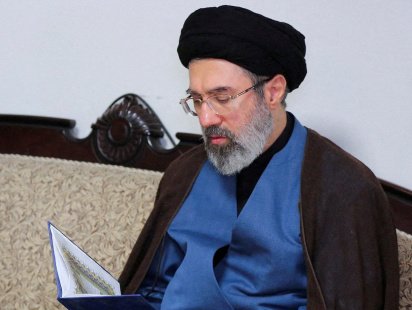


Iran’s Assembly of Experts has elected Mojtaba, the son of Ayatollah Ali Khamenei, as the next supreme leader. This decision reaffirms the dominance of hardliners in Iran’s leadership. Mojtaba, a 56-year-old cleric who survived previous air attacks on Iran, was chosen more than a week after his father’s death in an airstrike.
Ayatollah Mohsen Heidari Alekasir, a council member, stated in a video that the successor was selected based on Khamenei’s principle that Iran’s top leader should be a figure “hated by the enemy.” Heidari Alekasir highlighted that even the US President, Donald Trump, expressed disapproval of Mojtaba as the successor.
Mojtaba has consolidated power as a key figure under his father’s administration, closely tied to security forces and their extensive business interests. He has actively opposed reformist efforts aimed at engaging with the West to limit Iran’s nuclear program. With strong connections to the Revolutionary Guard Corps (IRGC), Mojtaba wields significant influence within Iran’s political and security structures.
Despite facing potential opposition from Iranians advocating for greater freedoms, Mojtaba’s ascension to the supreme leadership role marks a significant development. Born in 1969 in Mashhad, he grew up during his father’s opposition to the Shah regime and served in the Iran-Iraq war. Trained in the seminaries of Qom, Mojtaba holds the clerical rank of Hojjatoleslam.
Critics have raised concerns about potential dynastic politics in Iran, given Mojtaba’s familial ties to the supreme leader. The US Treasury Department imposed sanctions on him in 2019, citing his involvement in advancing his father’s regional ambitions and domestic objectives.
Mojtaba’s leadership potential gained attention after the tragic death of Ebrahim Raisi, another leading candidate for the supreme leader position, in a helicopter crash. He has been perceived as a conduit to Ayatollah Khamenei, with historical backing of hardliner figures like Mahmoud Ahmadinejad.
While facing criticism for lacking higher clerical credentials, Mojtaba remains a significant figure in Iran’s political landscape. His resemblance to his father and his family lineage to Prophet Mohammad further underscore his prominence in the country’s leadership transition.