
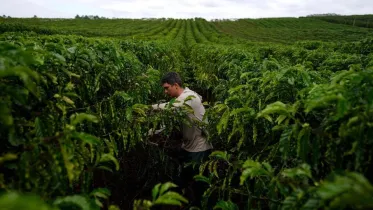


A recent analysis by independent research group Climate Central revealed that major coffee-growing regions worldwide are facing increasing days of extreme heat due to climate change. The study indicated that between 2021 and 2025, 25 countries, accounting for most of the global coffee production, experienced an average of 47 additional days of detrimental heat annually.
Countries like Brazil, Vietnam, Colombia, Ethiopia, and Indonesia, responsible for 75% of the world’s coffee supply, saw an average of 57 extra days with temperatures surpassing 30°C. Climate Central’s Vice President for Science, Kristina Dahl, warned that the escalating heat poses a significant threat to coffee plants, impacting yields and quality.
The organization highlighted that adverse weather conditions in coffee-growing regions have been a contributing factor to the recent surge in coffee prices, in addition to US tariffs on Brazilian coffee imports. Coffee cultivation requires specific temperature ranges and adequate rainfall for optimal growth, with temperatures above 30°C being particularly harmful to arabica and suboptimal for robusta coffee plants, the main varieties of global coffee production.
Climate Central’s analysis projected the increase in hot days caused by climate change by comparing the actual temperatures with those that would have occurred without carbon pollution. The study emphasized that the past three years have been the warmest on record, underscoring the urgent need to address climate change impacts on coffee production.