
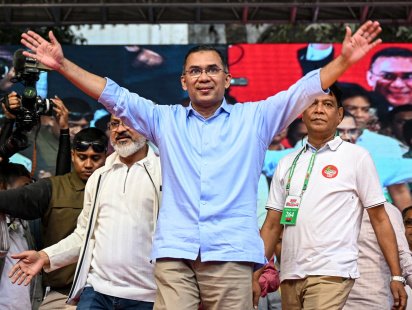


Large mandates are often seen as political victories, but from an institutional perspective, they represent a shift in power dynamics. Once a parliamentary majority reaches a certain threshold, discussions give way to expediency. The true test lies in how systems function when resistance is no longer a significant factor.
A common occurrence in democracies is the presence of a parliamentary majority. However, a two-thirds majority holds a different significance, altering the dynamics of power and influencing the behavior of institutions, allies, and opponents. While the numbers may suggest cause for celebration, in practice, they trigger a structural change.
After an election result, public attention is usually focused on the spectacle of politics, but systems respond to incentives rather than showmanship. As parliamentary arithmetic crosses specific thresholds, what is theoretically possible begins to shape actual behavior gradually over time.
Tarique Rahman’s political narrative has largely been characterized by his absence from Bangladesh’s political scene, allowing supporters and critics to project their imaginations onto his persona. However, as he returns to exercise authority within the system, expectations shift from rhetoric to procedural reality.
A supermajority further complicates this transition from expectations to execution, making legislative resistance harder to organize and facilitating smoother alignment within committees. While this can be advantageous for clearing policy backlogs or implementing long-awaited reforms, it also poses challenges in terms of governance stability.
The prime minister-designate’s emphasis on unity, restraint, and order signals a recognition of the institutional anxieties that arise with overwhelming mandates. How these assurances translate into actions will be pivotal in determining how the mandate is perceived by institutions and the nation.
As the institutional atmosphere adapts to the new power dynamics, governing styles begin to reveal themselves through administrative decisions rather than rhetoric. The behavior of the ruling party, treatment of opposition actors, and management of procedural obstacles will shape the phase ahead.
The longevity of dominant governments depends on convincing citizens and stakeholders that rules and governance practices are crucial even when inconvenient. For new leaders, managing administration requires patience, discipline, and an understanding of the complexities that arise within the machinery of state.
In the aftermath of an election, the true test of power lies in how it is wielded when no longer needing validation from voters. The burden on the ruling party leadership shifts towards internal discipline as external constraints lessen.
Voters have spoken, and now the narrative shifts towards institutional governance. The period ahead will not be defined by the weight of expectations but by the delicate balance of wielding power effectively and responsibly.