
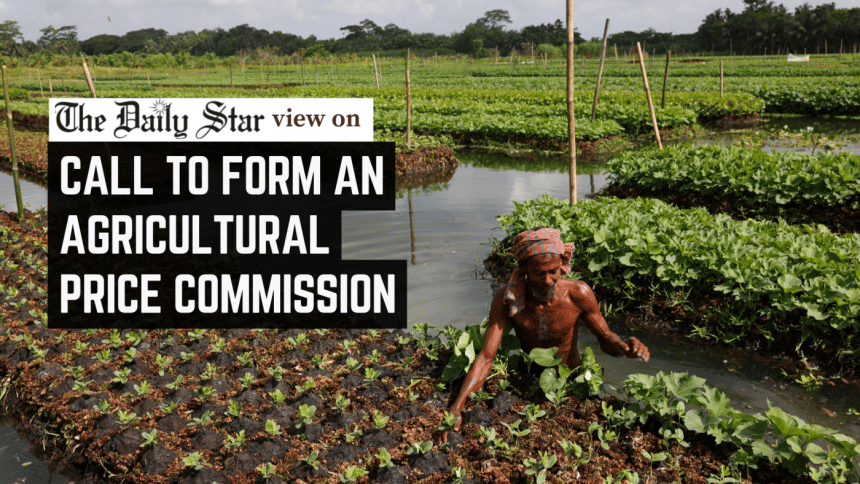


Farmers and agricultural workers in Bangladesh, despite their significant contributions to the economy, continue to be a neglected group. There has been minimal effort, especially from the government, to address their issues and support them in overcoming challenges. Hence, we endorse the proposal put forth by agricultural experts and policymakers to create an Agricultural Price Commission. Such commissions, common in many countries, are vital in ensuring fair prices for farmers, maintaining market stability, and safeguarding consumer interests, all of which are crucial for Bangladesh.
The agriculture sector in Bangladesh, while playing a critical role in food security and employment, faces vulnerabilities such as price fluctuations, weather uncertainties, and excessive profits by intermediaries. The absence of a proper mechanism to regulate farmgate prices underscores the historical lack of attention from policymakers towards this matter.
Bangladesh is a leading global producer of 22 agricultural goods, ranking highly in products like rice, vegetables, potatoes, jute, and aquaculture. Despite this, the sector has witnessed a slowdown in growth, raising concerns about food security, rural incomes, and overall economic progress. The sector’s growth rate was a mere 1.79 percent in FY2024-25, the lowest in more than a decade. Although agriculture remains a significant source of employment, the workforce has significantly decreased over the years, posing a challenge of retaining farmers without ensuring reasonable profits.
Between 2000 and 2016, male participation in agriculture decreased, while female participation increased. However, from 2016 to 2023, even female involvement declined. This trend could be attributed to agriculture no longer providing adequate income to sustain a decent standard of living compared to other sectors. Farmers are leaving the industry due to substantial losses incurred from poor pricing and environmental disasters. With the escalating impact of climate change and environmental risks, farmers are increasingly vulnerable to uncontrollable events, necessitating risk mitigation strategies to support their continued engagement in farming.
Bangladesh faces a significant issue with middlemen exploiting farmers, resulting in minimal returns for their hard work while a large portion of profits goes to intermediaries. To address this imbalance and safeguard consumer interests, the government must implement substantial reforms in the sector, starting with the establishment of the Agricultural Price Commission.