
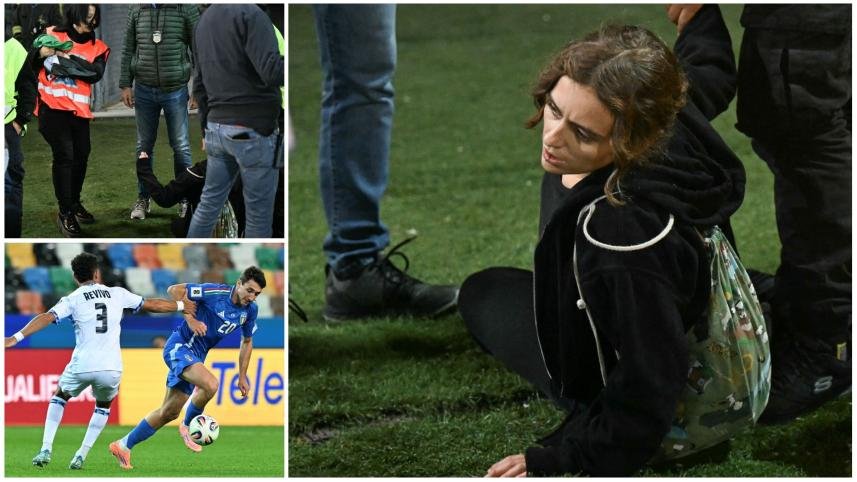


Italy’s World Cup qualifier against Israel in 2026 was marked by clashes between pro-Palestinian demonstrators and police before the match. Despite the Gaza ceasefire deal and a prisoner exchange between Israel and Hamas, around 10,000 protesters gathered in Udine, a city in Italy’s northeast. Some protesters engaged in disorder after a peaceful march.
A strong security presence of over 1,000 police officers and army personnel, along with helicopters and drones, monitored the demonstration held several kilometers away from Bluenergy Stadium, where Italy won the Group I fixture 3-0. Italy’s coach, Gennaro Gattuso, acknowledged the challenges surrounding the match and hoped for calmer situations in the future.
Stringent security measures, including checkpoints and barriers around the stadium, prevented protesters from approaching the venue. The march, initially peaceful, turned chaotic with police using water cannons and tear gas on some protesters who threw projectiles. Demonstrators waved Palestinian flags and banners demanding justice for Palestine.
An activist, Amer Hasan, expressed concerns over the peace plan’s lack of focus on a Palestinian state and self-determination. Hasan criticized the match against a nation allegedly involved in genocide. The protest, organized by Palestinian communities and activist groups, called for FIFA to exclude Israel from international competitions.
The match was overshadowed by the protest, with chants of “Free Palestine” and “Genocidal Israel” echoing in the crowd. The discontent in Italy stemmed from the football federation’s refusal to consider boycotting matches against Israel, unlike Norway’s FA, which supported sanctions against Israel. Despite the controversy, Italy secured a crucial victory in their World Cup qualification campaign.