


The upcoming parliamentary session will see a considerable influx of new members, as first-time legislators are poised to assume the roles of both the House leader and the opposition leader for the first time in the nation’s history.
The BNP, headed by Tarique Rahman, has secured a significant majority, while the Jamaat-e-Islami, led by Shafiqur Rahman, has emerged as the second-largest party.
Neither Tarique nor Shafiqur has prior legislative experience, yet they will shape the direction of the 13th parliament. More than two-thirds of the newly elected legislators, based on affidavits submitted to the Election Commission, will be entering the House for the first time.
The new parliament will be represented by eight parties, with leaders from five parties being elected as MPs for the first time. Notable first-time MPs include Nahid Islam, Zonayed Saki, and Nurul Haque Nur.
Parliamentary expert Nizam Ahmed described the situation as “unprecedented,” with both the House leader and the opposition leader being newcomers to parliamentary proceedings.
Historically, the position of opposition leader was absent in the first parliament established after the 1973 national elections. Sheikh Hasina of the Awami League has served as the House leader multiple times, while Khaleda Zia of the BNP held the position on three occasions.
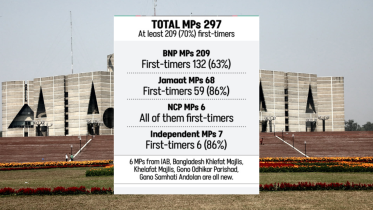
In the latest parliamentary makeup, around 70% of the 297 lawmakers are first-time entrants. The BNP and Jamaat-e-Islami have a notable proportion of newcomers within their ranks, with smaller parties entirely comprised of first-time legislators.
The recent elections marked Tarique’s debut in electoral politics, securing victory in two constituencies. Shafiqur, who previously contested elections without success, emerged victorious this time. Other first-time winners include Zonayed Saki and Nurul Haque Nur.
Experts anticipate a learning curve for the new lawmakers in understanding parliamentary procedures. However, the injection of fresh perspectives and energy into the legislature is seen as a positive step towards fostering constructive debates and minimizing street-level political confrontations.