
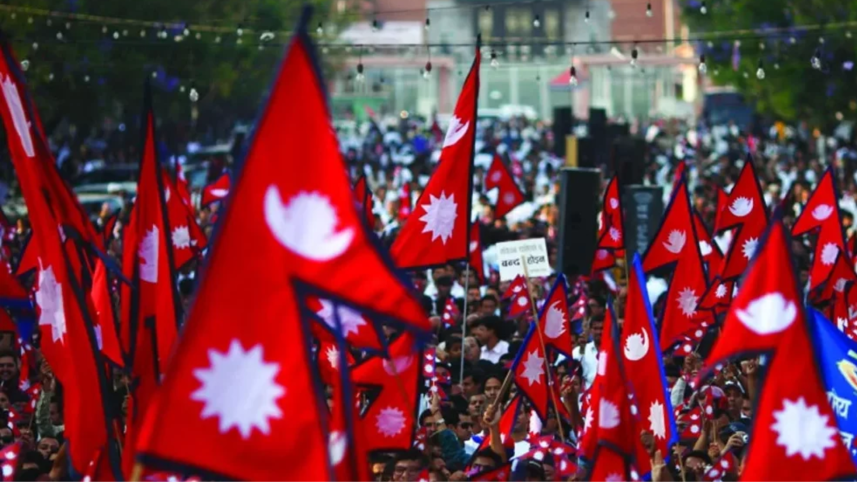


Hundreds of fresh voters have enrolled to participate in Nepal’s upcoming election, marking the country’s first polls following a significant uprising in September that led to the ousting of the government, as per election officials on Sunday. Narayan Prasad Bhattarai, the spokesperson for the Election Commission, disclosed that there are a total of 837,094 newly registered voters.
Bhattarai mentioned that as of Friday, 123 established political parties have submitted their registrations for the parliamentary elections scheduled for March 5. Additionally, 40 new party slates are currently undergoing verification to secure eligibility for the electoral race.
A notable surge in interest has been observed among the populace, particularly the youth, who view the upcoming election as a crucial evaluation of whether the grievances of the demonstrators, who protested against economic challenges and governmental misconduct, can lead to substantial reforms. One such individual is Dikshya Poudel, a 19-year-old student, who recently registered to vote, expressing enthusiasm about participating in the democratic process and supporting a transformative leader.
The initial trigger for the protests was a brief restriction on social media platforms, which swiftly evolved into a nationwide movement against corruption. The demonstrations resulted in the loss of 76 lives, along with significant damage to public institutions. The removal of four-time Prime Minister KP Sharma Oli, aged 73, led to the appointment of former Chief Justice Sushila Karki, also 73, in an interim leadership role until the elections.
Nepal, home to a population of 30 million, had been grappling with prolonged economic stagnation and widespread corruption, setting the stage for the upheaval witnessed in recent times. Many like Poudel envision a political landscape with fresh leadership capable of generating employment opportunities, combating poverty, and enhancing the living conditions in Nepal to prevent the youth from seeking opportunities abroad.
The ongoing turmoil has further strained Nepal’s fragile economy, with the World Bank cautioning in October that the heightened political and economic uncertainties are anticipated to cause a decline in growth to 2.1 percent. The World Bank also highlighted that a substantial 82 percent of Nepal’s workforce operates in informal sectors, with the GDP per capita estimated at $1,447 in the year 2024.