
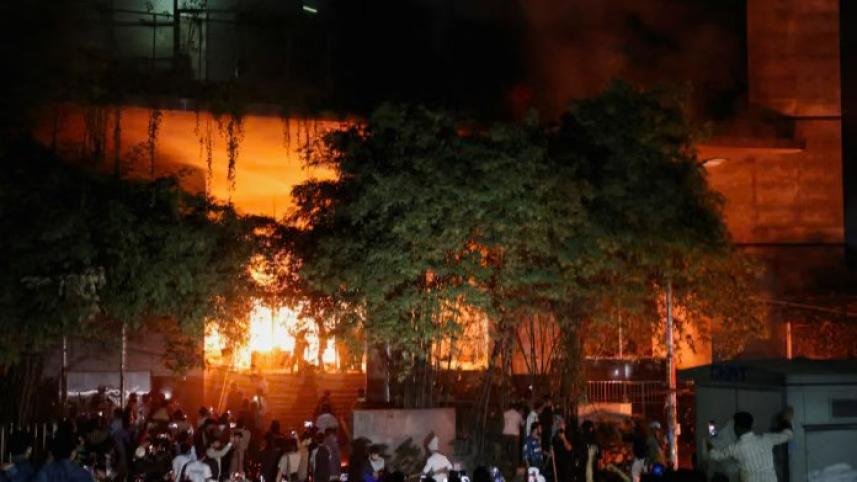


Government support is empowering organized groups within the nation, according to speakers at a discussion held recently. During the Centre for Governance Studies’ forum on “Media Reform in Bangladesh: Balancing Freedom, Responsibility, and Influence,” Nurul Kabir, the President of the Editors’ Council, highlighted the attacks on The Daily Star and Prothom Alo offices in Kawran Bazar as examples.
Kabir pointed out that the government either permitted or failed to prevent the attacks that occurred on December 18 last year, emphasizing that the incidents were not spontaneous but well-coordinated. He criticized the government’s response, noting the failure of fire services to promptly reach the scene as a significant lapse in state responsibility.
In a recent interview with Al Jazeera, Chief Adviser’s Press Secretary Shafiqul Alam disputed Kabir’s claim that the government was involved in the attacks, citing a lack of evidence. However, Kabir stood by his statement, referencing Alam’s own admission on Facebook about the challenges faced in mobilizing assistance during the attacks.
Kabir stressed the importance of a critical press in a democratic society, emphasizing that press freedom serves the people by allowing public opinion to influence governance between elections. He called for transparency and ethical guidelines for both journalists and media owners, asserting that the responsibility of implementing the Wage Board lies with both parties.
Media Reform Commission Chief Kamal Ahmed cautioned against potential conflicts arising from the government’s proposed Broadcast Commission Ordinance and Media Commission Ordinance, highlighting the risk of overlapping authorities. Ahmed emphasized the need for clear editorial oversight and grievance mechanisms to avoid undermining reform efforts.
The discussion also touched on financial insecurity affecting press freedom, with participants acknowledging the vital role of financial independence for journalists to work without bias. Concerns were raised about the rush to issue new ordinances by the current government and the potential implications for future governance.
The event featured insights from various speakers including Zillur Rahman, SM Shamim Reza, Robaet Ferdous, Ayesha Kabir, Shakhawat Hossain Sayantha, and others who emphasized the importance of gender inclusivity, critical thinking in media, and safeguarding journalistic independence. Discussions also delved into the need for vigilance against misinformation, particularly in the digital age leading up to elections.
Overall, the dialogue highlighted the pressing issues facing media freedom and governance in Bangladesh, underscoring the role of a free and responsible press in upholding democratic values.