
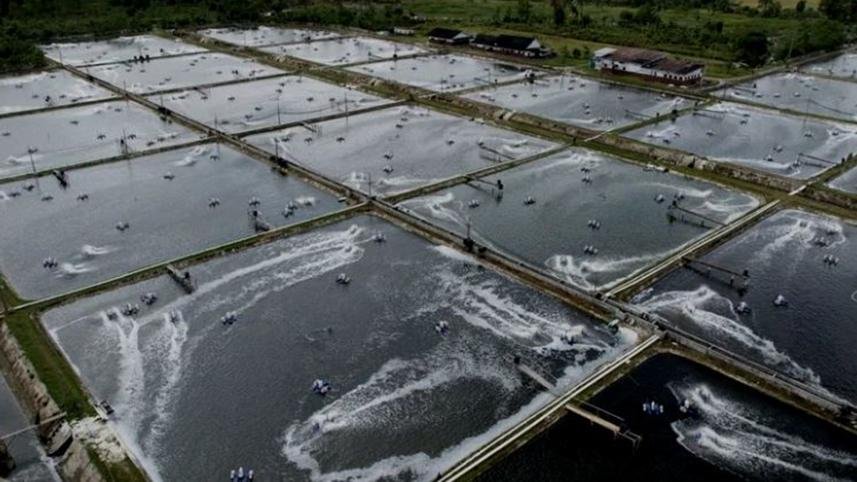


At a shrimp farm located in Indonesia, over 16,000 km (9,942 miles) away from Washington D.C., the effects of US President Donald Trump’s import tariffs have disrupted Denny Leonardo’s plans for expansion. Leonardo had intended to increase his farm’s capacity by adding approximately 100 new ponds to the existing 150 on Java island’s southwestern tip this year. However, the uncertainty following Trump’s initial tariff threats in April caused a setback in his plans.
Despite the recent agreement with Washington in July for a reduced tariff of 19%, down from the initial 32%, Leonardo is still evaluating the impact on his business. In response to the escalating tariffs and pressure on Indonesia’s exports to the US, businesses like Leonardo’s are exploring new opportunities to diversify and reduce reliance on the US market.
Indonesia heavily relies on the US as its primary market for shrimp, with 60% of the country’s $1.68 billion shrimp exports going to the US last year. The head of Indonesia’s shrimp farmers’ association, Andi Tamsil, anticipates a potential 30% decline in total exports this year compared to 2024 due to the 19% tariffs, putting the livelihoods of approximately one million workers at risk.
Despite the agreement reached in July, many US customers are still delaying their shrimp purchases, according to Budhi Wibowo, who leads a seafood businesses association. He points out that the new tariff rates put Indonesia at a disadvantage compared to Ecuador, the leading producer of farmed shrimp globally, with a lower import tariff set at 15%.
While China is the largest shrimp importer by volume globally, Indonesian exporters have traditionally favored the US due to better pricing. Before the tariffs, only around 2% of Indonesia’s shrimp exports went to China. Now, the industry is actively seeking to tap into the Chinese market by promoting its products to Chinese buyers through various initiatives and delegations.
In addition to targeting the Chinese market, industry representatives are considering diversifying exports to other regions such as the Middle East, South Korea, Taiwan, and the European Union. Jakarta’s potential free trade agreement with Brussels further opens up opportunities for expanding export markets.
Despite the challenges posed by the US tariffs, Leonardo remains hopeful about the survival of his family business but acknowledges that the pace of expansion may not be as rapid as originally envisioned. Leonardo expressed optimism about maintaining the business through continued supply and demand dynamics but tempered expectations for significant growth in the near term.