
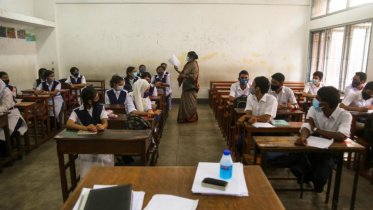


A government committee has proposed reforms to limit public examinations to five core subjects and ensure universal secondary education up to Class 12. The consultation committee for Improvement of Secondary Education suggested that centralized public exams should only cover Bangla, English, mathematics, science, and social science. The panel led by Emeritus Professor Manzoor Ahmed emphasized assessing core competencies over testing every subject, suggesting that subjects like digital technology, religion, physical education, and the arts be internally evaluated rather than included in central written exams to reduce academic pressure on students.
Furthermore, the committee recommended permanently abolishing public exams at Classes 5 and 8, arguing that their reintroduction disrupts regular teaching. It also proposed maintaining a unified curriculum up to Class 10 and delaying specialization until Class 11, criticizing the current stream division at Class 9 as inadequate. The committee advocated for bringing the entire school system under a single ministry for educational continuity.
The report highlighted learning gaps based on a field assessment of 437 students from diverse schools, indicating poor performance in mathematics and English. To enhance educational effectiveness, the committee proposed shifting the academic calendar from January–December to September–June, with a long vacation in July and August to avoid monsoon disruptions. Additionally, it suggested reevaluating the 45-minute class period to maximize instructional time by calculating weekly subject hours instead of rigid daily limits, aiming to facilitate deeper and more practical learning experiences, especially in mathematics and science.