
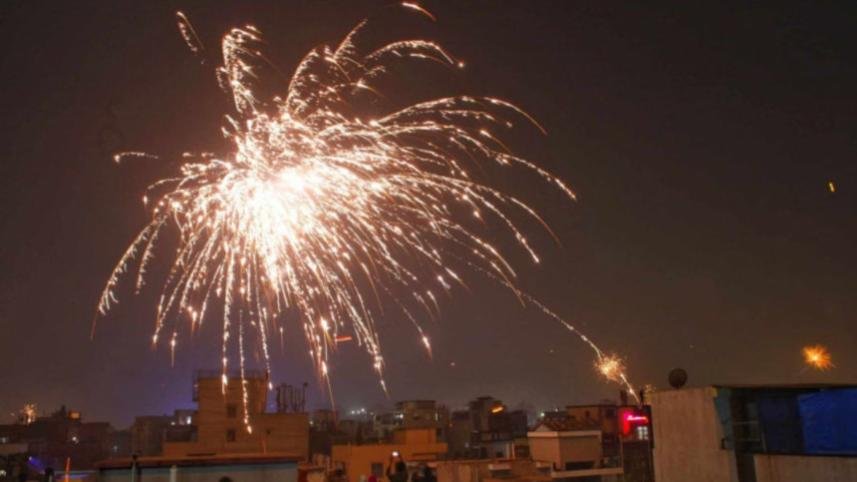


Every year in Dhaka, a cycle of forgetfulness occurs. Incidents involving fires, injuries, scared animals, and dangerous air quality are acknowledged, only to be tucked away until the next occasion arises. The use of fireworks and sky lanterns is often defended as tradition and a source of joy. However, the question arises whether the environmental, health, and safety risks associated with these practices outweigh their perceived benefits, or if they are merely upheld for their aesthetic appeal.
On December 31, 2024, fires erupted in Dhanmondi and Mirpur due to sky lanterns and firecrackers. Similarly, on December 31, 2023, three teenagers sustained severe burns when a sky lantern they were releasing caught fire on a rooftop. Additionally, around 40 sky lanterns became entangled in the overhead electric wires of the Dhaka Metro Rail, leading to service disruptions on New Year’s morning. These incidents are not isolated occurrences but rather foreseeable consequences of the intersection of sparks, densely populated areas, flammable materials, and lax enforcement.
The argument in favor of fireworks often revolves around emotional attachments linked to celebrations, national events, religious festivals, and the visual spectacle they provide. While they may offer temporary economic benefits to those involved in their production and sale, the essential question remains whether these traditional practices are indispensable or if safer alternatives can achieve similar results without the associated risks.
Fireworks pose significant environmental hazards, releasing harmful particulate matter, heavy metals, sulfur compounds, and carbon residue into the air, soil, and water bodies. In a city like Dhaka, where air quality regularly exceeds safe levels, the impact of fireworks exacerbates existing pollution issues, leading to adverse health effects such as asthma attacks, cardiovascular stress, and respiratory problems.
Furthermore, noise pollution from fireworks contributes to stress and worsens mental health conditions, disproportionately affecting vulnerable groups like children, the elderly, and individuals with respiratory illnesses. The safety implications of fireworks cannot be overlooked, with the potential for fires in densely populated areas where buildings are closely situated and fire response capabilities are strained.
Animals also suffer from the consequences of fireworks, with disruptions to their navigation cues and acute fear responses, especially for pets and stray animals without shelter. Despite arguments that fireworks support livelihoods, the long-term costs associated with healthcare, environmental cleanup, and fire damage outweigh the short-lived economic gains.
Transitioning away from fireworks does not mean abandoning celebrations but rather reimagining how festivities are conducted. Many cities have successfully implemented alternative forms of entertainment such as laser light shows, drone displays, and community events that prioritize safety and environmental sustainability over traditional practices.
The reluctance to regulate fireworks stems from their perceived cultural significance and fear of backlash, but as evidence mounts regarding their detrimental impacts, the need for change becomes undeniable. It is time to reassess our attachment to fireworks and explore safer, more sustainable ways to mark occasions without compromising public health, safety, and the environment.
In conclusion, the continued use of fireworks in Dhaka raises serious concerns regarding their environmental, health, and safety implications. It is crucial to shift towards alternative forms of celebration that prioritize the well-being of individuals, animals, and the environment, while still fostering a spirit of joy and community.