
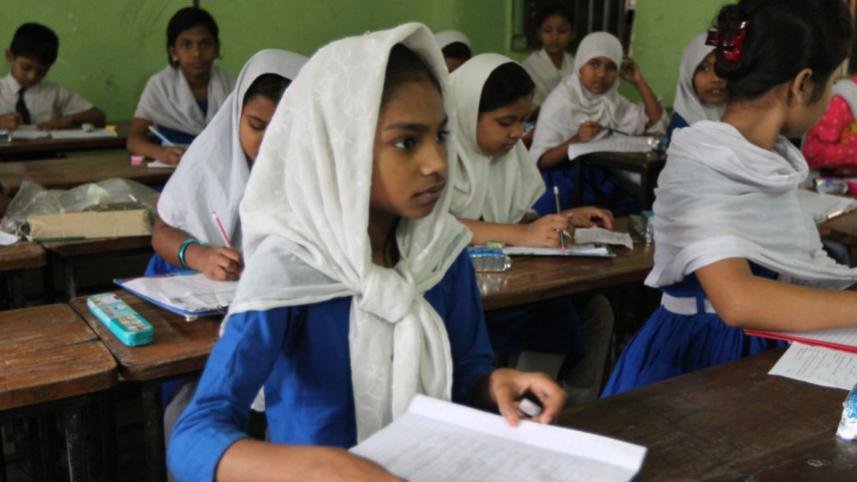


In countries of the Global South such as Bangladesh, education plays a vital role in transforming lives and communities. Particularly for girls and young women in marginalized areas, education serves as a powerful tool to break the cycle of poverty and social exclusion across generations. A holistic, values-based education rooted in local contexts has the potential to reshape girls’ perceptions of what they can achieve, going beyond academic performance to foster leadership, confidence, and empathy. Genuine empowerment through education should commence early and extend widely.
However, the current situation presents a stark reality. A recent report from the Centre for Policy Dialogue reveals that 61.7 percent of youth in Bangladesh who are Not in Education, Employment, or Training (NEET) are female. This statistic underscores the systemic obstacles that hinder women’s full engagement in society. To address this issue, a focus on education, particularly English language proficiency for global access, is crucial. Proficiency in English empowers individuals with confidence, employability, and international opportunities. When a girl in Kurigram learns English, she begins to envision herself as a participant in a broader world, capable of leadership.
Women’s leadership is often undervalued, constrained by societal expectations, or viewed as an anomaly. Women frequently face the burden of proving themselves repeatedly in both professional and educational settings. Yet, when women are equipped with the tools to lead, they often demonstrate resilience, collaboration, and visionary leadership.
Transforming these mindsets starts with reimagining educational approaches. In many rural areas, formal education may be inadequate or inaccessible for girls. Introducing non-traditional, peer-led learning models can make a significant impact. Initiatives like the British Council’s English and Digital for Girls’ Education (EDGE) clubs are bridging gaps in regions with high dropout rates and limited role models. In these tailored spaces, girls build confidence, advocate for themselves and their communities, and enhance their English skills.
The link between education and economic empowerment cannot be overstated. Educated women are better positioned to contribute to the economy, support their families, and drive innovation. They are also more adept at navigating crises and assuming leadership roles. Basic education can open doors for female workers, as evidenced by the experiences of garment workers, enabling them to access new opportunities and garner respect.
Investing in girls’ education now lays the groundwork for a more inclusive and equitable economy in the future. Emphasizing English language proficiency, digital literacy, critical thinking, and collaboration is essential on this journey.
Challenges faced by rural girls differ from those in urban settings, marked by limited resources, fewer role models, and entrenched gender norms. Localized approaches like the EDGE program showcase the impact of community-driven solutions. Collaboration across sectors—government, NGOs, private institutions, and academia—is essential to scale effective practices and bridge gaps in education access, quality, and opportunities.
Educators should be viewed not just as providers of knowledge but as catalysts for curiosity, critical thinking, and empathy. Teachers, especially those from the communities they serve, are pivotal change agents. Investing in women educators from marginalized backgrounds can amplify the impact of educational efforts, offering both instruction and inspiration.
Quality education that fosters leadership, critical thinking, and confidence is not merely a right but a foundational step toward gender equality. Creating and expanding educational environments where girls can realize their potential, especially in underserved communities, is imperative.
The narratives of the girls we engage with serve as powerful testaments to the transformative potential of education for liberation. These stories underscore that with the right skills, support, and environments, girls have the capacity to lead. They deserve opportunities, and it is our collective duty to ensure they receive them.