
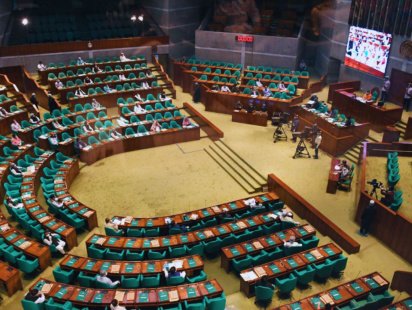


In a recent national election in Bangladesh, citizens engaged in parliamentary democracy with increased participation and competition compared to previous years. The crucial question arises: what type of government and opposition will the country accept this time?
Since the mass uprising in 1990, Bangladesh has been following a British-style parliamentary system. This model relies on two essential components: a governing body and an opposition that questions, scrutinizes, and holds the government accountable. Both are indispensable for a functioning parliamentary democracy.
Despite having an official opposition, the reality has been different. Opposition parties have not always utilized parliament effectively. While criticism of those in power is warranted due to abuses and corruption, the behavior of opposition groups has been problematic. Both major parties have frequently boycotted parliamentary sessions over the past decades, regardless of whether they were in power or opposition.
These boycotts have become a recurring pattern, undermining the essence of parliamentary democracy. Such actions have led to elections with limited competition and instances of the government remaining in power uncontested. The 2014 polls, in particular, were deemed neither free nor competitive by international observers due to significant opposition boycotts.
The aftermath of the 2014 election saw a shift from boycotting opposition to a compliant “domesticated opposition.” This transition highlighted the challenges of maintaining a genuine opposition in the country’s political landscape.
The habit of relying on street protests rather than active participation in parliamentary proceedings has serious consequences. It hampers legislative power, enables governments to frame disagreements as security issues, and normalizes the idea that attending parliamentary sessions is optional, despite being a fundamental duty of elected officials.
Following recent political developments, including a transitional government overseeing a reportedly more open election, Bangladesh faces the need for a redefined political landscape. The upcoming government and opposition will play crucial roles in shaping the country’s democratic future.
To strengthen democratic opposition in Bangladesh, three key shifts are essential. Firstly, the opposition must actively participate in parliamentary proceedings, committees, and debates. Second, they should focus on research-backed criticisms and propose alternative policies within parliament. Lastly, the opposition must uphold democratic principles even when challenging situations arise.
Without these fundamental changes, the country risks perpetuating existing political dysfunctions, leading to a cycle of boycotts, government arrogance, and compromised democratic processes. It is imperative for Bangladesh to embrace a more constructive and engaged political environment to safeguard its parliamentary democracy.