
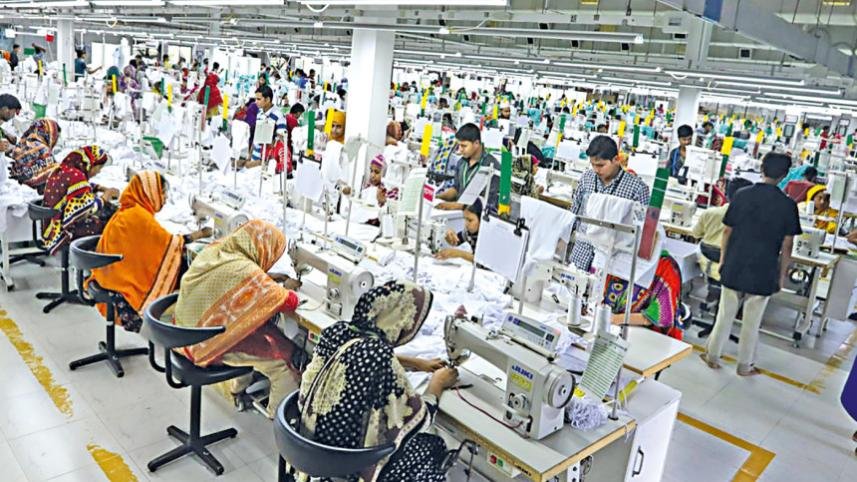


Bangladeshi clothing exporters are anticipated to offset a significant portion of forthcoming EU tariffs by reducing their prices post the termination of duty-free access. A recent study highlights the potential strain on profits and long-term competitiveness in this scenario. If the EU enforces a 10 percent tariff on Bangladeshi apparel post the cessation of trade preferences, exporters may have to slash their pre-tariff export prices by around 4 percent to maintain competitiveness. This implies that approximately 40 percent of the tariff burden would be taken on by exporters themselves rather than entirely passed on to European buyers. The study, unveiled at an event in Dhaka by Research and Policy Integration for Development (RAPID) in partnership with the International Growth Centre (IGC), delves into how exporters are anticipated to react to higher tariffs and exchange rate fluctuations post Bangladesh’s graduation from least developed country (LDC) status in 2026. Duty-free and quota-free access to the EU under the Everything But Arms (EBA) initiative is scheduled to conclude in 2029 post a transitional phase. Following the expiration of preferences, apparel exports, predominantly comprising low-value garments, could confront Most Favoured Nation (MFN) tariffs of approximately 12 percent. Through a counterfactual pricing model based on comparator exporting nations, the researchers infer that tariff pass-through is likely to be partial in such a scenario. Instead of passing on increased tariffs to buyers, exporters are projected to lower their prices to safeguard market share in the EU. While this strategy might help sustain export volumes momentarily, it could significantly squeeze profit margins. The study warns that prolonged price absorption might impede firms’ ability to invest, upgrade technology, and transition into higher-value segments. Moreover, it suggests that exchange rate depreciation will offer only limited relief post preference erosion. Md Deen Islam, research director of RAPID, mentioned that around half of exchange rate changes are reflected in export prices, implying that currency depreciation alone may not offset the impact of heightened tariffs. The ongoing shift towards a more market-oriented exchange rate system in Bangladesh since mid-2024 has heightened volatility for exporters. Despite the recent nominal devaluation of the taka, Bangladesh underwent a prolonged period of real exchange rate appreciation between 2012 and 2022, rendering its exports progressively pricier compared to competitors like China, Vietnam, and Cambodia. Coupled with escalating tariffs, this trend has further constrained exporters who predominantly vie on price. The study notes substantial divergence across product categories, with woven garments appearing more susceptible than knitwear. At the event, Munir Chowdhury, national trade expert at the Bangladesh Regional Connectivity Project-1 under the commerce ministry, emphasized that non-tariff barriers can sometimes be more constrictive than tariffs, underscoring the necessity for early preparedness. He cautioned that evolving requirements concerning human rights, labor standards, and environmental, social, and governance (ESG) compliance could increasingly influence the future sustainability of Bangladesh’s export markets. Echoing similar sentiments, Badrun Nessa Ahmed, senior research fellow at BIDS, emphasized that Bangladesh’s competitiveness in the EU market hinges not only on price but also on compliance, standards, logistics, and branding. She highlighted that Bangladesh has a 4-5 year window before complete preference erosion, allowing for policy and firm-level adjustments. Some larger enterprises are already delving into innovation, automation, and market diversification. Ahmed stressed the necessity for the apparel sector to transition from low-priced goods to higher-value segments, as preferential access is not perpetual, and LDC graduation is inevitable.
© All Rights Reserved by Daily Dhaka Times