
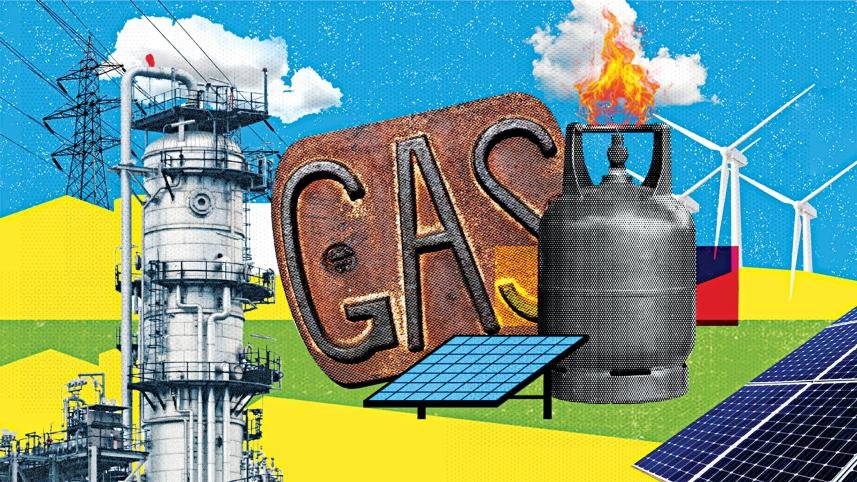


The rising demand for natural gas alongside a decline in domestic production has prompted the Bangladesh government to seek alternative energy sources. Despite previous strategies like the Integrated Energy and Power Master Plan 2023, the focus has shifted to imported liquefied natural gas (LNG), creating economic challenges due to insufficient investment in domestic gas exploration.
The surge in LNG imports has led the government to raise gas tariffs significantly, impacting industrial production costs. This reliance on imported LNG, coupled with substantial annual subsidies, poses a risk to Bangladesh’s energy security and financial stability.
In recent fiscal years, Bangladesh experienced fluctuations in LNG imports, with notable increases following a decline in FY2022-23 due to market prices and fiscal constraints. The government has been passing on the increased costs to various sectors, excluding grid-based power generation, through multiple tariff hikes.
Industries faced additional costs totaling around Tk 4,560 crore ($0.37 billion) in FY2023-24 due to gas price hikes, despite a decline in gas supply. Conversely, gas-fired captive power generators contributed approximately Tk 3,160 crore ($0.26 billion) in extra payments during the same period.
With a gas supply deficit of over 1,300MMcfd compared to demand, Bangladesh faces the challenge of bridging the gap through enhanced regasification capacity and increased LNG imports. The government aims to boost local gas production but requires more substantial funding for exploration to achieve set targets.
Efforts to explore onshore gas through international tenders aim to bolster local production. However, without significant success, Bangladesh may face escalating LNG import costs, potentially surpassing $5 billion annually by FY2029-30. In a less optimistic scenario, high LNG prices could lead to a payment burden of up to $8.5 billion in the same fiscal year.
To mitigate these challenges, Bangladesh should prioritize renewable energy and local gas utilization. Emphasizing decentralised systems like rooftop solar, coupled with sufficient budget allocation for exploration and energy efficiency, is vital to reducing LNG dependence and enhancing energy resilience.
The current energy landscape underscores the need for strategic planning and diversification to ensure sustainable energy security and economic stability for Bangladesh.