
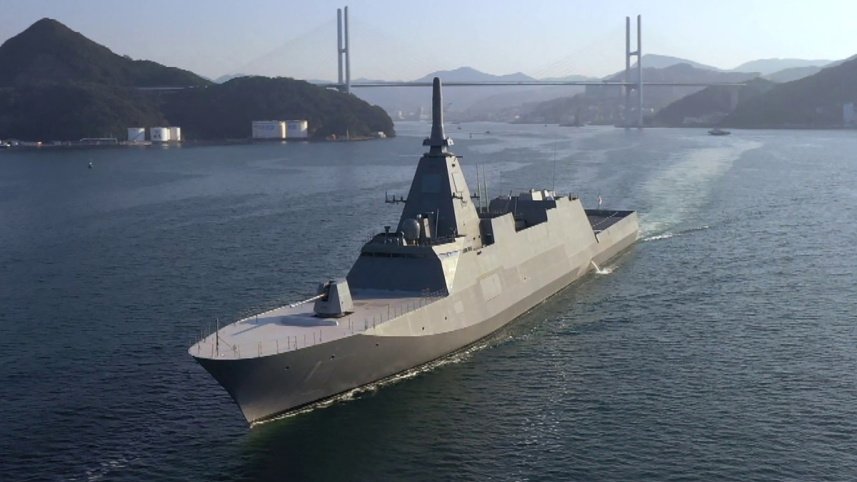


Australia is set to enhance its naval capabilities by acquiring 11 Mogami-class frigates from Japan’s Mitsubishi Heavy Industries, as announced by Defence Minister Richard Marles. This move is part of Australia’s military restructuring plan unveiled in 2023, aimed at bolstering its long-range strike capabilities in response to the growing naval power of China.
The country is committed to expanding its fleet of major warships from 11 to 26 within the next decade. Marles described the US$6 billion (Aus$10 billion) agreement as the most significant defense-industry deal ever reached between Japan and Australia. Mitsubishi Heavy Industries secured the contract over Germany’s ThyssenKrupp Marine Systems based on the superior capability it offered for Australia’s needs.
Highlighting the strategic alignment between Australia and Japan, Marles emphasized the advanced features of the Mogami-class frigates, which are equipped with cutting-edge stealth technology and a formidable arsenal of weapons. These frigates will replace Australia’s outdated Anzac-class vessels, with the first Mogami-class ship expected to be operational by 2030.
Defence industry minister Pat Conroy lauded the frigates as a game-changer for the Australian navy, citing their ability to launch long-range Tomahawk cruise missiles. The initial three frigates will be constructed overseas, with Western Australia’s shipbuilding yards set to take on the production of the remaining vessels.
In a separate development, Australia’s decision to procure nuclear-powered submarines under the AUKUS pact with the US and the UK in 2021 has stirred debate due to the substantial costs involved. The country aims to acquire at least three Virginia-class submarines over the next 15 years, with estimates suggesting that the AUKUS submarine initiative could amount to US$235 billion over the next three decades.
Despite concerns over potential cost overruns and strategic shifts, Australia is committed to gradually increasing its defense expenditure to 2.4 percent of its GDP, surpassing NATO’s two percent target but falling short of the US’s 3.5 percent benchmark. The country’s defense landscape is evolving to align with changing geopolitical dynamics and emerging security challenges.