
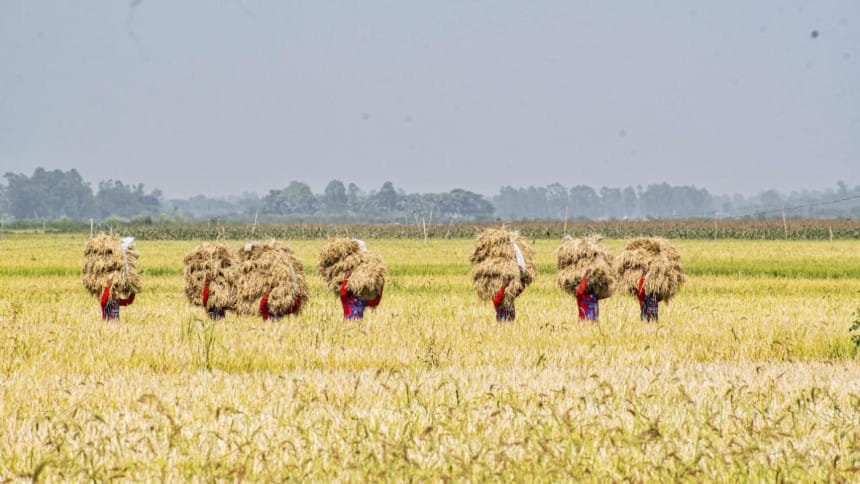


In Bangladesh, rice plays a vital role in daily nutrition, constituting roughly 60% of caloric intake and utilizing about 76% of cultivated land. Despite the country consistently producing around 39 million metric tonnes of rice annually, the rice markets are susceptible to sudden price spikes due to supply chain issues or environmental pressures.
For instance, in August 2023, coarse rice prices surged by 13% within a month, despite stable production levels and a 500,000-tonne increase in Aman harvest output compared to the previous year. These fluctuations disproportionately affect poorer households, where even a Tk 2 per kg increase significantly impacts food budgets.
Utilizing Artificial Intelligence (AI) can help predict and manage these market shocks effectively. Ensemble learning models like gradient boosting, CatBoost, and XGBoost have shown remarkable accuracy in forecasting rice yields in Bangladesh, with R-square values approaching 0.99. However, forecasting rice prices is more intricate, with models like Vector Autoregression (VAR) showing R-square values between 0.60 and 0.80, indicating moderate predictive power.
AI systems incorporating environmental factors such as rainfall and temperature can aid in anticipating price disruptions. Satellite-based AI initiatives in Southeast Asia have successfully detected crop stress before visible signs, enabling timely interventions. Implementing similar systems in Bangladesh could facilitate proactive responses, like adjusting procurement strategies or releasing food reserves, to prevent uncontrollable price fluctuations.
Despite the potential benefits of AI in agriculture, challenges exist in its implementation. In rural areas like haor and char, unreliable internet connectivity hampers real-time data collection. The rural-urban digital gap further impedes AI adoption, with only 37.8% of rural residents in Bangladesh having internet access compared to 68.4% in urban areas.
Improving data collection methods and enhancing digital literacy among farmers and officials are crucial steps for successful AI integration in agriculture. Piloting AI forecasting systems in key rice-producing districts and establishing a unified digital rice price database could significantly enhance market predictability and fairness. By combining machine learning with real-time data and building institutional capacity, Bangladesh can transition from reactive crisis management to proactive food policy, benefitting every household reliant on rice for sustenance.