
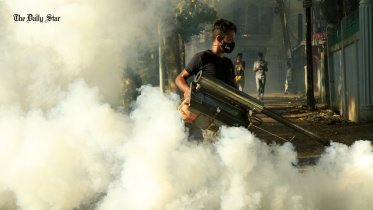


Amid a recent increase in mosquito activity, the health ministry has launched an investigation into the effectiveness of the insecticide being used for mosquito control. The Health Minister, along with the State Minister, is scheduled to inspect the storage facilities of the two Dhaka city corporations today. They will be accompanied by experts from the National Institute of Preventive and Social Medicine (NIPSOM) to assess the performance of the insecticides, according to officials.
This action follows a meeting held by the health ministry with city corporation and health officials to address mosquito control strategies. In Dhaka, there has been a notable rise in Culex mosquitoes due to inadequate elimination of breeding sites by both city corporations. Concerns have been raised regarding the efficiency of the current insecticides used for mosquito eradication.
The surge in mosquito-borne diseases like dengue puts a strain on health facilities, prompting the health ministry to prioritize mosquito control and disease prevention. Jahirul Islam, CEO of Dhaka South City Corporation (DSCC), stated that experts will assess the effectiveness of the insecticides used by their workers in mosquito elimination.
Health Minister Sardar Md Sakhawat Husain is scheduled to visit the DSCC storage in Sayedabad, while State Minister for Health MA Muhit will inspect the storage of Dhaka North City Corporation in Mirpur-2 today. Jahirul mentioned that tests have been conducted on the insecticide following the mosquito surge in the capital, but the results are pending. Additionally, ward-level teams have been formed to supervise the ongoing mosquito control efforts.
During the meeting, discussions were held on further measures that the city corporations can implement for mosquito control, as per a senior health ministry official. The meeting also addressed the importance of raising public awareness about cleanliness to eliminate breeding grounds, as revealed by an anonymous source.
Last year, the country witnessed 413 dengue-related fatalities, marking it as the third deadliest year on record. Furthermore, a total of 102,861 individuals were hospitalized with dengue, the second-highest figure recorded in Bangladesh over the past 25 years.