


On a chilly evening in early March, a fresh presence entered the realm of German culture with the debut of Nosferatu. Helmed by FW Murnau, the film attracted a curious crowd eager for a novel experience.
Despite being unauthorized and legally dubious in relation to Bram Stoker’s Dracula, this adaptation rose above its pirated origins to establish itself as a unique creation of artistic and intellectual importance.
Nosferatu represented a deliberate fusion of myth and modernity, blending science with superstition. The film notably diverged from the Victorian aristocratic gothic portrayal of vampires, relocating the myth within the realm of German expressionist creativity.
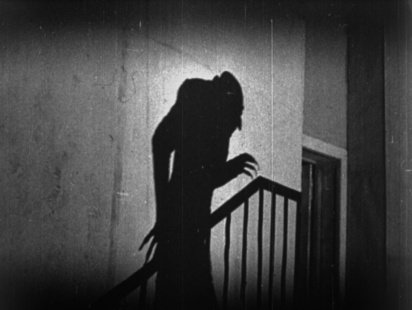
Count Orlok, characterized by his elongated limbs and rat-like visage, presented a stark departure from Stoker’s refined Dracula. The movie skillfully utilized shadows, light, and exaggerated proportions to craft a distinct visual horror style.
Orlok’s appearance, distinct from Stoker’s Count Dracula, embodied expressionism’s emphasis on translating internal emotions into visual form, utilizing distortion not for mere effect but to unveil psychological tensions. This artistic innovation proved pivotal.
This was cinema that embraced its unique medium, employing shadows and composition to convey not just fear but also the concealed anxieties of its era.
Arriving at a moment fraught with its own haunting context, Germany, recovering from World War I and navigating the upheavals of the Weimar period, provided fertile ground for narratives exploring disruption, contagion, and shattered certainties.
Orlok’s silent movements symbolized a pervasive cultural unease, reflecting modernity’s fractures, unseen threats to societal structure, and the notion that beneath technological progress lay incomprehensible forces.
Beyond traditional Gothic horror, Nosferatu delved into themes such as the inevitability of death and human fears. Orlok transcended being a mere antagonist to embody a natural force, an inevitable erosion of life rather than a moral rebel.
The film touched on existential inquiries about the human condition, including mortality’s inevitability, the delicate line between life and absence, and how fear manifests as projections of inner anxieties.
Another philosophical layer explored in the film pertained to the interplay between self and otherness. Orlok personified pure otherness, disrupting human norms and prompting interpretations about disease, foreign anxieties, or collective dread.
While offering no definitive solutions, the film underscored the act of confronting unsettling truths as a means of engaging with the unknown.
Nosferatu’s cultural impact was both direct and diffuse. Its visual style influenced subsequent vampire films, shaping the shadowy aesthetics and psychological depth of supernatural storytelling for generations to come.
The film’s archetypes, including eerie silhouettes, oppressive twilight settings, and slow, inexplicable predation, became genre staples. Its aesthetic reverberations extended beyond cinema into literature, visual arts, and music, inspiring artists to render the intangible tangible.
The unauthorized nature of Nosferatu added to its allure. Legal disputes over its copyright and attempts to suppress its distribution paradoxically increased its reach and enduring allure.
What commenced as a creative reinterpretation evolved into a work celebrated for its departure from source material, daring visual language, and exploration of human anxieties through the expressive power of film.
Nosferatu transcended the mere depiction of a vampire on screen; it showcased how cinema could visualize fear and mirror the anxieties of its time.