
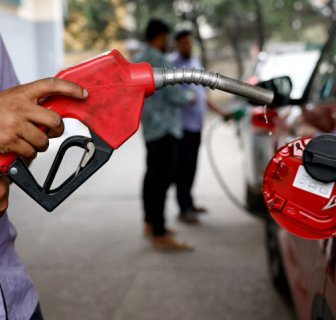


Oil prices surged above $100 per barrel on Monday as the US Navy made arrangements to block vessels traveling to and from Iran via the Strait of Hormuz, potentially limiting Iranian oil exports due to unsuccessful negotiations between Washington and Tehran to end the conflict. Brent crude futures climbed by $7.03, or 7.4 percent, reaching $102.23 per barrel by 0810 GMT following a slight decrease on Friday. Meanwhile, US West Texas Intermediate rose by $7.31, or 7.6 percent, to $103.88 per barrel after a 1.33 percent drop in the previous session.
President Donald Trump announced on Sunday that the US Navy would initiate a blockade of the Strait of Hormuz, escalating tensions following unsuccessful talks with Iran and endangering a fragile two-week ceasefire. Trump also indicated that oil and gasoline prices could remain elevated until the US midterm elections in November, acknowledging the potential political consequences of his decision to engage with Iran six weeks ago.
Nordic bank SEB analyst Erik Meyersson commented that the US blockade announcement signifies the unfeasibility, for now, of the ceasefire’s primary objective as perceived by the US, which was the reopening of the Strait. The US Central Command confirmed that US forces would begin enforcing the blockade on all maritime traffic entering and exiting Iranian ports at 10 a.m. ET (1400 GMT) on Monday, applying to vessels of all nationalities accessing Iranian ports in the Arabian Gulf and Gulf of Oman.
In response, Iran’s Revolutionary Guards warned on Sunday that any military ships approaching the Strait of Hormuz would violate the ceasefire and face severe consequences. Physical crude barrels are currently trading at significant premiums compared to futures, with some grades reaching record highs of around $150 per barrel. RBC Capital Markets analyst Helima Croft suggested that a convergence between paper and physical markets could materialize if President Trump follows through on his blockade threat with actual naval enforcement.
Data from LSEG revealed that oil tankers are avoiding the Strait of Hormuz in anticipation of the US blockade on Iran. Despite this, three fully loaded supertankers successfully navigated the strait on Saturday, marking the first vessels to exit the Gulf since the ceasefire agreement was reached. Additionally, Saudi Arabia announced on Sunday that it had restored full oil pumping capacity through the East-West pipeline to approximately 7 million barrels per day, shortly after addressing the damage to its energy sector resulting from attacks during the Iran conflict.