
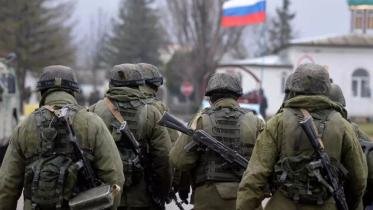


In the early hours of February 24, 2022, Russian military forces breached Ukraine’s borders from multiple directions in what was deemed the largest land invasion in Europe since 1945. Russian President Vladimir Putin declared a “special military operation” with the aim to “demilitarize and denazify” Ukraine, affirming that Russia had no intentions of occupying the country. The Kremlin had anticipated a quick victory but faced unexpected resistance, leading to a protracted conflict that has now extended into its fourth year, reshaping global alliances, economies, and warfare strategies.
During the initial phase from February to April 2022, Russia launched a coordinated offensive to swiftly capture Kyiv by targeting Ukraine’s leadership and infrastructure. However, Ukraine’s effective defense, aided by anti-tank weaponry and Western intelligence support, thwarted Russia’s plans. In a significant turning point in late March 2022, Russian forces were compelled to retreat from northern Ukraine, failing to achieve their primary goal of toppling the Ukrainian government. This setback marked a dent in Russia’s perceived military prowess.
Subsequently, from April 2022 to early 2023, the conflict shifted to the eastern front with a focus on the industrial region of Donbas. Cities like Mariupol and Lysychansk suffered substantial destruction as Russia intensified its assault. Despite sporadic territorial gains by Russia, including in Donetsk Oblast, the Ukrainian defense held firm, preventing a decisive breakthrough. Escalating attacks on Ukraine’s energy infrastructure aimed to weaken civilian morale but failed to break the deadlock.
In mid-2023, Ukraine launched successful counteroffensives in key regions, pushing Russian forces west of the Dnipro River. While this marked a strategic victory for Ukraine, the war remained in a state of attrition, with neither side achieving a conclusive outcome. The conflict evolved into a grueling stalemate characterized by trench warfare and incremental territorial shifts.
From 2024 to 2026, the conflict witnessed a shift towards modern warfare tactics involving drones, precision weapons, and electronic warfare. Both sides sustained heavy casualties, with Russia facing significant losses despite continual troop mobilization. The war transformed into a battle of endurance and attrition rather than territorial conquest, with global repercussions impacting energy prices, inflation rates, and food security.
The prolonged conflict in Ukraine has rekindled Cold War dynamics, leading to increased NATO presence and heightened European defense spending. Ukraine’s economy suffered a severe downturn, with reconstruction costs soaring and millions displaced. The war has upended global economic stability, causing energy price fluctuations and disrupting food supplies. The displacement of over 10 million Ukrainians has reshaped demographics in the region, underscoring the lasting impact of the conflict.
As of late February 2026, the war in Ukraine persists without a definitive resolution. Despite efforts by various leaders, including US President Donald Trump, to end the conflict, no clear path to peace has emerged. The ongoing conflict serves as a reminder that 21st-century wars are protracted and complex, challenging the notion of swift military campaigns.