
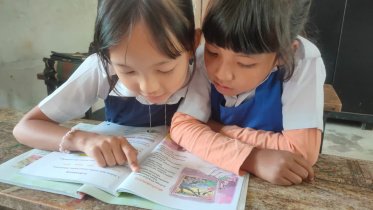


In Sylhet classrooms, textbooks in indigenous languages for native children are intended to be actively used but often remain untouched. Despite the government’s efforts to provide these materials, the vision of inclusive education faces challenges due to the lack of teacher training and coordination.
The initiative, initiated in 2017 by the Department of Primary Education Office in Sylhet, aims to reduce indigenous children’s dropout rates by incorporating their mother tongues into the curriculum. Over the years, textbooks in indigenous languages have been introduced to students, with the curriculum expanding to cover classes one to three in 2020.
This year, students in 35 schools across Sylhet division have received books in Tripura, Garo, and Sadri languages. However, the absence of instruction in these languages within classrooms has hindered the effectiveness of the program.
According to Deepak Ranjan Sharma, the headteacher at Ishachhara Government Primary School, the impact of teaching in the ethnolinguistic language has been minimal due to the lack of trained teachers. Many students struggle to engage with the books as they are unfamiliar with the language.
Students like Fencila Rema and Sayon Debbarma express their challenges in learning from the new language books without proper guidance in their native languages. Parents’ inability to assist due to their own educational limitations further complicates the situation.
Concerns have been raised by community leaders, such as Jonok Tripura and Nereus Buam, regarding the lack of qualified teachers to deliver instruction in the indigenous languages. Despite efforts to address these issues, Muhammad Rofequal Islam Talukder of the Department of Primary Education Office in Sylhet division acknowledges the ongoing distribution of ethnic language books but highlights the need for effective teaching methods.
Experts like AFM Zakaria and Gourango Patro emphasize the critical importance of preserving indigenous languages and providing education in mother tongues. Zakaria suggests conducting a comprehensive census and implementing tailored educational strategies for indigenous communities to ensure sustainable learning outcomes.
In conclusion, the challenges faced in implementing the indigenous language education program highlight the necessity for thorough planning, teacher training, and ongoing support to realize the goal of inclusive education for all students.