


The BNP administration recently unveiled a set of education reforms, including the mandatory introduction of a third language, expansion of vocational education, and incorporation of new arts and culture content in schools. Emphasizing sports, technology, entrepreneurship, leadership, creativity, culture, and “learning with happiness” will also be prioritized.
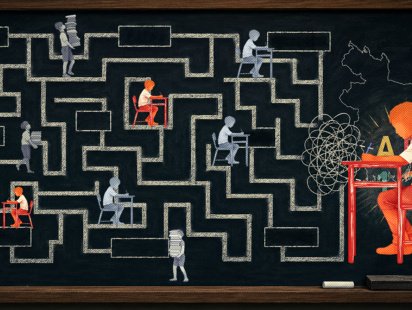
While these proposals are generally well-received and politically popular, the challenge lies in the finite nature of resources within Bangladesh’s education system. The country faces constraints such as limited instructional time, teacher expertise, school leadership, classroom space, public finance, and implementation capacity. Each new initiative draws from these limited resources, leading to potential trade-offs.
The concept of opportunity cost is crucial, as choosing to focus on one area means sacrificing attention in another. For instance, implementing compulsory third-language learning requires resources for teacher recruitment and training, curriculum development, textbook creation, assessments, and administrative efforts. The same resource pool is tapped into for vocational education, arts and culture, and other initiatives.
While new policies may seem promising on paper, the actual impact is often not clearly evident. Time and resources are stretched thin, leading to increased demands on teachers and potentially lower quality outcomes across multiple objectives. Policymakers must carefully consider whether scarce resources could be better utilized elsewhere to maximize benefits.
In light of the learning crisis revealed in the 2022 National Student Assessment, where only around half of Grade 5 students demonstrated grade-level proficiency in Bangla and even fewer in mathematics, setting priorities becomes critical. Addressing foundational learning challenges should take precedence over introducing new subjects or initiatives.
Efforts to enhance literacy, improve mathematics outcomes through teacher coaching, adopt effective learning technologies, and invest in additional classrooms to increase instructional time should be prioritized. Educational reforms should be assessed based on their impact on learning outcomes, instructional time, and overall improvement in children’s education.
While Bangladesh has no shortage of valuable ideas, the key lies in effective prioritization. Not all desirable objectives can be pursued simultaneously, and not every good idea is suitable for immediate implementation. Careful consideration of where limited resources can yield the greatest benefits is essential for sustainable progress in the education sector.