
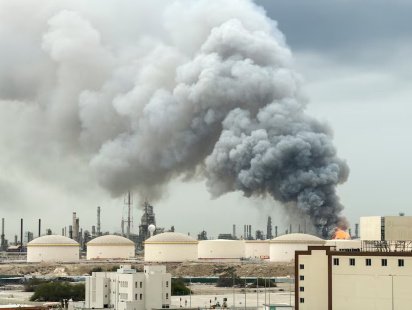


At a press briefing held at his Miami resort on Monday, President Donald Trump expressed optimism that the ongoing conflict would conclude “very soon,” emphasizing that the United States has not achieved sufficient success thus far. This comes amidst global concerns, with countries like Bangladesh experiencing continuous repercussions from the conflict initiated by the U.S. The narrative surrounding the war has recently shifted, with Trump suggesting a potential imminent conclusion, raising questions about the eventual outcome and the manner in which it will unfold.
Trump also mentioned, “I believe the war is largely finished, for the most part.” His statements appeared somewhat contradictory compared to his earlier assertions since the conflict’s inception. Just before his recent remarks, Trump had called for the “unconditional surrender” of the Islamic republic. However, the Iranian leadership rejected this demand, and the assembly declared Mojtaba Khamenei, the son of Ayatollah Ali Khamenei, as the new supreme leader of the nation. This decision aligns with the regime’s stance on seeking retribution for Khamenei’s assassination. Despite ongoing attacks, the regime’s ability to convene and make such a significant choice indicates its resilience.
The U.S. responded to this development with expected disapproval, asserting that any leader not sanctioned by them “won’t endure for long.” This underscores Iran’s awareness of the potential threats posed by U.S.-Israel joint operations and intelligence capabilities that led to Khamenei’s assassination. Recent statements by U.S. Secretary of Defense Pete Hegseth on monitoring activities and possible Russian involvement indicate a complex scenario where Iran must carefully navigate its strategies.
The prospects of a prolonged conflict loom if Iran intensifies its defense with Russian support, while U.S. surveillance and assertions suggest a challenging road ahead. The U.S.’s stance on the new supreme leader’s longevity and its strategic interests raise uncertainties about the conflict’s resolution. The dynamics of the war reflect vested interests on all sides, with questions remaining on the feasibility of a clear victory.
The conflict’s impact extends beyond military strategies into economic realms, with the U.S. administration’s priorities emphasizing gains for defense and technology sectors. Trump’s policies, focused on national interests and benefiting key industries, shape the course of the conflict and its aftermath. The interplay between economic gains, political pressures, and global ramifications underscores the complexities of the conflict and its implications for various stakeholders.
As the conflict evolves, considerations of energy security, trade dynamics, and geopolitical alliances come to the forefront. Iran’s strategic ties with allies like Russia and China, along with their respective interests, add layers of complexity to the conflict. The interplay of regional and global powers in the war’s narrative underscores the intricate web of alliances and rivalries shaping its trajectory.
In conclusion, the evolving conflict underscores the intricate interplay of political, economic, and strategic interests driving the actions of nations involved. The future course of the war remains uncertain, with implications reaching far beyond military engagements. As the conflict unfolds, the balance of power, economic considerations, and societal impacts will continue to shape the narrative of this ongoing struggle.