
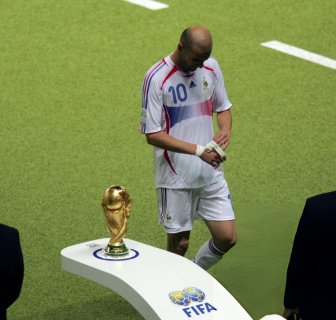


In a poignant echo of ancient Greek tragedies where heroes met their downfall due to a fatal flaw, the night of July 9, 2006, at Berlin’s Olympic Stadium unfolded like a contemporary drama. At its heart was Zinedine Zidane, portrayed as both the hero and the tragic figure of the story.
The narrative had its genesis two years prior during the 2004 European Cup, where France suffered a defeat to Greece, prompting Zidane to withdraw from international football, appearing fatigued and disenchanted with the French national team. This departure cast a shadow over France’s 2006 FIFA World Cup qualification campaign, leaving their chances hanging by a thread.
However, a remarkable turn of events occurred in the summer of 2005 when Zidane declared his comeback, citing a mysterious voice that compelled him to return and aid his nation. This revival breathed hope into a faltering team, propelling them through qualification to the grand stage of the 2006 FIFA World Cup, with Zidane, aged 34, leading the charge.
Despite doubts about his advancing age, Zidane showcased his artistry during the knockout stage, orchestrating mesmerizing performances. His mastery was evident in matches against Spain and the star-studded Brazil team, where he wielded his magic to guide France to victory.
The pinnacle arrived in the final against Italy, where Zidane’s audacious Panenka penalty stunned the world. However, the fairytale took a tragic turn during extra time when a heated exchange with Marco Materazzi culminated in Zidane headbutting the Italian defender, resulting in a red card and his abrupt exit from the game.
As Zidane left the field, the image of the FIFA World Cup Trophy, gleaming in the light, stood in stark contrast to his shadowed face, symbolizing the complex nature of human greatness – brilliance, hubris, and a moment of profound frailty.