
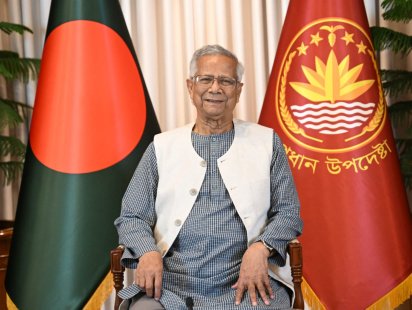


Chief Adviser Prof Muhammad Yunus emphasized today that Bangladesh has transitioned from a submissive stance in foreign policy to one based on mutual respect and national interest. In his televised farewell address preceding the upcoming transfer of power, Yunus underscored the restoration of sovereignty, national interests, and dignity as core pillars of Bangladesh’s external relations.
Highlighting the country’s shift, Yunus emphasized that Bangladesh no longer adheres to a submissive foreign policy dictated by other nations. He pointed out the potential for regional economic growth by fostering collaboration with neighboring countries like Nepal, Bhutan, and northeastern India. Additionally, he stressed the strategic importance of Bangladesh’s maritime access, emphasizing its role as a gateway to the global economy.
Yunus also discussed the establishment of economic zones, trade agreements, and duty-free market access to position the region as a global manufacturing hub. He mentioned agreements with international port management firms aimed at elevating efficiency to meet global standards.
Addressing security concerns, Yunus addressed the ongoing Rohingya crisis, highlighting its impact on Bangladesh’s national security, regional stability, and economy. He expressed frustration over the lack of effective international initiatives to address the crisis but noted efforts made by his administration to draw global attention to the issue. Yunus commended the UN’s support, including a visit from the secretary-general and a special conference on the Rohingya crisis at his request.