
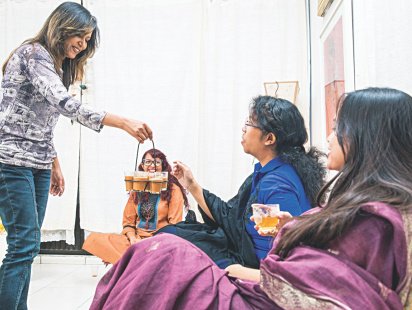


In our society, adda represents more than mere conversation. It embodies a leisurely sense of community, fostered in tea stalls, street corners, and rooftops, characterized by chatter, debates, and sports discussions, devoid of the need for resolution or consensus. Nowadays, it seems rare to recall the last occasion we spent hours with friends without constantly checking the time.
In earlier times, rooftops buzzed with activity on summer afternoons. Boys engaged in kite-flying competitions, aiming to cut each other’s strings, while girls observed from the sidelines, sharing laughter and banter. A carrom board often made an appearance, attracting a keen audience. Eyes would wander towards neighboring rooftops, where teenagers sought to impress onlookers.
Evenings were not initiated by screens but by simple gatherings for conversation over tea, light snacks, and the pure joy of companionship. Aunts engaged in discussions about their favorite TV serials. What was once a natural occurrence now feels uncommon in a fast-paced life that demands more and allows little time for breaks.
Streets and fields used to serve as communal playgrounds. Friendly competitions were organized between lanes, fostering intense rivalries. Locals would gather to spectate, while temporary stalls sold toys, sweets, and snacks. Today, the availability of open spaces has diminished, and teenagers no longer take the lead in organizing games as heavy school bags and rigorous coaching schedules consume their time.
Most rooftops remain deserted now, and the cassette players in living rooms have fallen silent. Anticipation for the latest BTV cinema release has waned. The tradition of adda has been supplanted by social media algorithms, incessant notifications, and a mechanical existence dominated by deadlines. Conversations no longer meander without urgency post-school or work hours.
Once, adda served as the glue that bound communities in small towns and bustling neighborhoods. Familiar faces would meet daily, and greetings were not just a formality but a ritual. Children played in the streets under the watchful eyes of elders. Issues were discussed, opinions were shared, and this constant interaction built trust, a sense of belonging, and subtly shaped the social fabric of lives.
Today, neighbors pass each other in elevators with awkward silence. Youngsters avert their gaze to their phones to evade eye contact with elders, fearing criticism or unwanted inquiries. The discomfort arises because the connection has dwindled.
Digital platforms like social media have emerged as substitutes rather than equivalents. Reactions, comments, and group chats offer a semblance of involvement without the warmth of physical presence. Gatherings now revolve around scrolling through screens. Conversations, once leisurely with pauses, laughter, and interruptions, have transformed into rapid texts and emojis.
The line between work and home has blurred, with professional personas extending beyond office hours into late-night emails and mandatory virtual meetings. Spontaneous adda sessions have given way to planned outings. Dining at restaurants, capturing photos for social media, and returning to phones have become the norm. Discussions often revolve around trends and online updates, with genuine conversations about daily life becoming scarce.
Those who once facilitated adda have dispersed due to the forces of globalization, relocating to urban centers or foreign countries in pursuit of education, work, or better prospects. The tight-knit circles that convened each evening are now scattered, with conversations reduced to sporadic messages or status updates.
Reviving adda does not entail rejecting modernity. In a society fixated on speed and efficiency, opting to sit, converse, and unite becomes a quiet act of defiance. It serves as a reminder that human connection is the true bond that unites us. Small gestures like these can rekindle a sense of belonging. It’s time to set aside our phones, find a cozy spot, and reminisce about the past.