
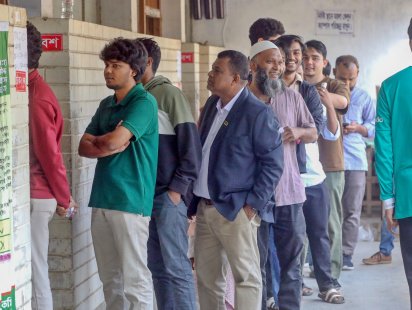


Dr. Muhammad Yunus deserves congratulations for overseeing Bangladesh’s pivotal election, marking a significant turning point in the country’s political landscape. The success of the February 12 election was made possible by the dedicated efforts of General Waker-uz-Zaman’s team, supported by a diligent police force and bureaucracy. With nearly 1 million security personnel deployed across 42,651 polling centers, the peaceful conduct of the election was a testament to the nation’s commitment to democracy.
The election witnessed a record turnout of approximately 127.7 million voters, resulting in a clear verdict. The BNP-led alliance secured a majority of the contested seats, while Jamaat-e-Islami’s coalition also made significant gains. Notably, Tarique Rahman’s return to Dhaka after 17 years in exile was met with electoral success, positioning him to lead the next government with a strong mandate. The election, with a 68.1 percent approval rate, reflected the will of the people.
Both BNP and Jamaat demonstrated political maturity by accepting the election results gracefully, setting a positive precedent for democratic governance. The festive atmosphere during the voting process underscored the public’s enthusiasm for participating in shaping the country’s future. Moving forward, the focus should be on effective governance, devoid of corruption and violence, with an emphasis on inclusivity and accountability.
While Jamaat saw significant gains in the election, the results also highlighted the society’s preference for secular governance over theocracy. As the opposition, Jamaat’s role in upholding democratic values and representing diverse voices, including women and minorities, will be crucial in shaping Bangladesh’s democratic journey. Similarly, the NCP has an opportunity to establish itself as a prominent political force through meaningful contributions in parliament.
The future actions of the Awami League, which has expressed discontent with the election outcome, will be closely watched. Genuine reform and organizational restructuring may be necessary to regain public confidence. The role of social media in disseminating misinformation during the election period also warrants scrutiny, as public awareness and scrutiny have increased.
Overall, the successful conduct of the election and the peaceful transition of power underscore Bangladesh’s commitment to democracy. International support for the elected government is contingent on transparency and good governance. As the country enters a new phase of democratic governance, the key takeaway is to govern with accountability and responsiveness to the people’s needs.