
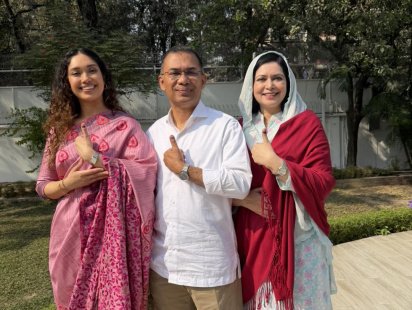


BNP emerged victorious in the 13th national parliamentary election, with a significant number of voters exercising their right to vote in a joyous and peaceful environment. Official reports and the party’s own calculations show that BNP and its coalition partners are leading in 201 out of the 272 declared constituencies, positioning the party for a potential two-thirds majority.
After nearly two decades out of power, BNP expressed confidence in achieving more than a two-thirds majority, citing the election results as a resounding public endorsement. The BNP Central Election Steering Committee Spokesperson, Mahdi Amin, stated optimism about the victory based on vote counts and detailed seat-wise information.
The Bangladesh Jamaat-e-Islami, previously a strong ally of BNP, also made significant progress by winning 62 seats. Unofficial reports indicate that BNP Chairman Tarique Rahman secured victories in the Dhaka-17 and Bogura-6 constituencies over his opponents by substantial margins.
In Dhaka-17, Tarique, who recently returned from a 17-year exile in the UK, garnered 72,699 votes with the party’s symbol, the “sheaf of paddy,” surpassing Dr. Khaleduzzaman of Jamaat-e-Islami who received 68,300 votes with the scales symbol. BNP Secretary General Mirza Fakhrul Islam Alamgir also secured a dominant lead in Thakurgaon-1, receiving 238,836 votes with the party’s symbol.
Several BNP standing committee members, including Khandaker Mosharraf Hossain, Mirza Abbas, Abdul Moyeen Khan, Amir Khosru Mahmud Chowdhury, and Salahuddin Ahmed, emerged victorious in their respective constituencies. Voters, including individuals with disabilities, displayed patience and determination as they queued at polling stations nationwide to cast their votes.
The high turnout of women voters, arriving in groups across different age groups, underscored the broad participation in the election process. In addition to electing a new parliament crucial for the country’s democratic progress, voters also participated in a referendum on constitutional reforms, marking a historic dual vote in the country’s history.