
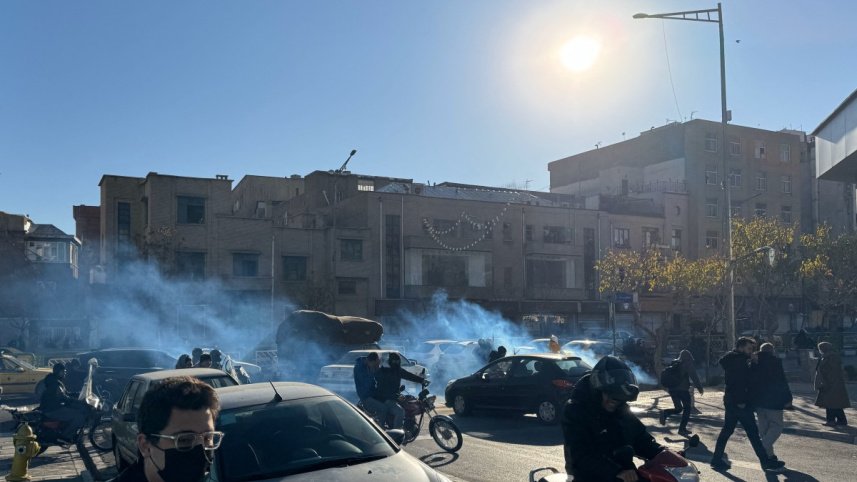


Iranian students took to the streets in Tehran on Tuesday following a previous day’s demonstration by local shopkeepers protesting economic challenges, receiving a message of empathy from the president. Reports from Ilna, a news agency tied to Iran’s labor movement, detailed protests occurring at seven prestigious universities in Tehran and at the technology university in Isfahan. The student unrest followed Monday’s protests in central Tehran by shop owners and preceded a scheduled temporary shutdown of banks, schools, and businesses in the capital and across most provinces to conserve energy during severe cold weather.
The Iranian rial has significantly depreciated against major currencies, notably the US dollar, with the dollar reaching about 1.42 million rials on Sunday compared to 820,000 rials a year earlier. This currency devaluation has led to increased import costs, negatively impacting retail traders. Observers noted a heightened police and security presence at key intersections in central Tehran and near certain universities on Tuesday, although some shops that closed the previous day in the city center had reopened.
Spontaneous demonstrations erupted initially at Tehran’s largest mobile phone market on Sunday before spreading, albeit remaining limited in scale and largely confined to central Tehran. President Masoud Pezeshkian, with limited authority compared to Iran’s supreme leader Ayatollah Ali Khamenei, met with labor leaders on Tuesday and proposed measures to address the economic crisis. He emphasized the government’s commitment to engaging in dialogue with protesters to address their legitimate grievances responsibly.
State television reported that parliamentary speaker Mohammad Bagher Ghalibaf called for steps to enhance people’s purchasing power while cautioning against external actors and government critics exploiting the protests. The government also announced the appointment of former economy and finance minister Abdolnasser Hemmati as the new central bank governor on Monday.
Economic challenges have disrupted trade in imported goods, with both sellers and buyers delaying transactions due to price fluctuations. Some traders voiced frustration over the lack of government support in managing soaring import costs, highlighting the significant impact on their livelihoods. Inflation in December reached 52 percent year-on-year, according to official data, although many essential goods experienced even more substantial price hikes.
Iran’s economy, already strained by years of Western sanctions, faced additional pressure after the United Nations reinstated international sanctions related to the country’s nuclear program in late September. The ongoing protests over the high cost of living have not escalated to the scale of nationwide demonstrations witnessed in 2022, which erupted following the death of Mahsa Amini in custody, sparking widespread unrest resulting in numerous casualties and arrests. Previous protests in 2019, triggered by a sharp rise in petrol prices, spread to numerous cities, including Tehran, leading to multiple fatalities.