
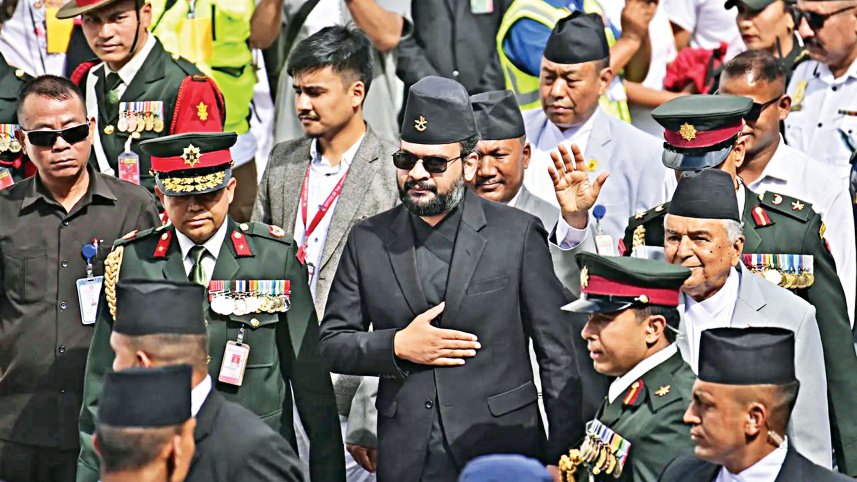


An up-and-coming political coalition in Nepal has welcomed a key addition, as a third prominent figure has joined the new alliance gearing up for the upcoming election, as per a party source on Tuesday.
Two influential figures in Nepal’s political landscape, Rabi Lamichhane from the Rastriya Swatantra Party (RSP) and Balendra Shah, the mayor of Kathmandu, sealed a pact on Sunday to merge their parties for the elections scheduled for March 5, 2026.
Their commitment includes addressing the grievances of the younger “Gen Z” demonstrators who took to the streets in September in response to fatal anti-corruption protests that led to the downfall of the government. Kulman Ghising, the energy minister in the interim administration, also formally joined the new coalition on Monday.
Sanjiv Ballav Bhattarai, a former Ujyalo Nepal committee member who has now aligned with Lamichhane’s RSP, remarked, “This agreement… has introduced a fresh political entity into the mainstream.”
Ghising, aged 55, garnered significant public backing for his handling of the electricity shortage crisis at the Nepal Electricity Authority.
The youth-led uprising on September 8-9 resulted in the deaths of at least 77 individuals. The protests, initially sparked by a temporary social media ban imposed by the government, tapped into widespread frustration over economic stagnation and political misconduct in the nation of 30 million people. The accord emphasized that the new alliance champions “the ethos of the Gen Z movement against corruption and mismanagement.”
Key figures from the Gen Z demonstrations, such as Sudan Gurung, played a crucial role in facilitating discussions between the leaders.
Nepal transitioned to a federal republic in 2008 following a decade-long civil conflict and a peace agreement that integrated former Maoist rebels into the government and abolished the monarchy.