
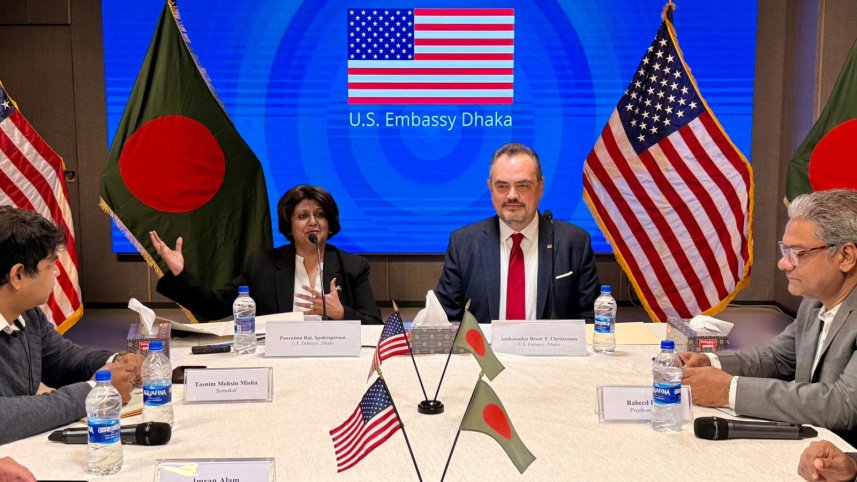


The US Ambassador to Bangladesh, Brent Christensen, expressed his concerns regarding the expanding Chinese influence in South Asia. He emphasized the importance of clearly communicating the risks associated with engaging with China in specific sectors if Bangladesh chooses to pursue that direction. Christensen underscored that the US remains impartial in Bangladesh’s electoral processes but is eager to collaborate with the elected government to enhance cooperation in trade, economy, security, and counterterrorism.
In his inaugural media engagement at the EMK Centre since assuming his post on January 12, Christensen highlighted a shift in US policy, with the current administration focusing on trade and security measures over democracy and human rights. He mentioned the intention to bolster security collaboration and interoperability with Bangladesh, emphasizing their growing military-to-military partnership through various training programs on peacekeeping, counterterrorism, and readiness.
Christensen stressed the US’s commitment to supporting Bangladesh in enhancing its military capabilities, including aiding in defense procurements within budget constraints. He mentioned the flexibility in offering diverse options, including US systems or identifying suitable systems from allied nations. The ambassador emphasized the importance of meeting Bangladesh’s defense needs effectively through collaboration with partners.
Looking ahead to the upcoming election on February 12, Christensen described it as a pivotal moment for Bangladesh and expressed anticipation for a productive relationship with the incoming government. He reiterated the US’s neutrality in electoral matters, emphasizing the desire to work closely with the elected administration to strengthen ties in trade, economy, security, and counterterrorism for the benefit of both nations.
Regarding trade relations, Christensen highlighted increased imports of wheat, soybeans, cotton, and LNG from the US since the tariff adjustments by the Trump administration. He emphasized the aim of fostering a conducive business environment to attract more US companies to invest in Bangladesh, contributing to economic growth and job opportunities. The ambassador also emphasized the broader benefits of US businesses, such as promoting international standards and community support.
On the issue of the Myanmar conflict and Rohingya crisis, Christensen acknowledged the complexities in Myanmar’s political landscape and commended Bangladesh for its humanitarian efforts in hosting Rohingya refugees. He mentioned the US’s significant contributions toward addressing the Rohingya crisis and highlighted a recent agreement with the UN Office for the Coordination of Humanitarian Affairs to allocate $2 billion for supporting vulnerable communities, including those in Bangladesh.
Christensen’s positive outlook on Bangladesh’s future and the ongoing collaboration between the US and Bangladesh in various domains reflect a commitment to fostering mutually beneficial relationships and addressing regional challenges.