
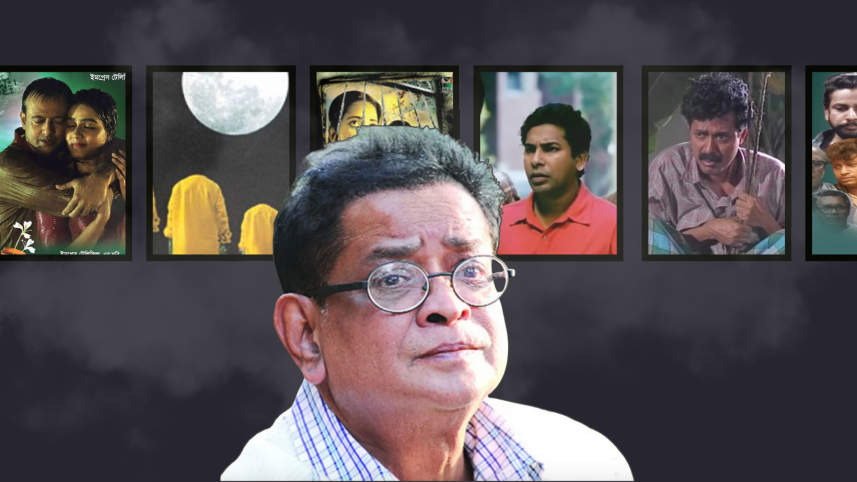


As rain falls and the earth’s scent fills the air, many still turn to a Humayun Ahmed book or watch one of his old dramas. Humayun Ahmed, born on November 13, 1948, into a family with a police officer, grew up surrounded by art, literature, and curiosity. His father, Faizur Rahman Ahmed, had a deep love for literature, and his mother, Ayesha Foyez, drew inspiration from him to become a writer. The experience of losing his father during the Liberation War influenced his perception of human vulnerability and bravery, themes evident in all his stories.
Humayun Ahmed was more than just a writer and filmmaker; he was the voice of the Bangladeshi middle class. His dramas from the 1980s to the 2000s, such as “Ei Shob Din Ratri,” “Aaj Robibar,” and “Kothao Keu Nei,” were characterized by simple settings like apartments, verandas, and tea stalls. Despite their ordinary dialogues and humor, these stories resonated deeply with audiences, making them empathize with characters who could easily be their neighbors.
In Humayun Ahmed’s narratives, heroes were not royalty or rebels but ordinary individuals like the man waiting at a bus stop or the student who dared to dream despite failing exams. His characters mirrored real-life emotions, leading to public outcry when a fictional character like Baker Bhai from “Kothao Keu Nei” faced on-screen injustice.
Characters like Himu, a barefoot wanderer in a yellow panjabi, and Boltu from “Daruchini Dwip” who couldn’t afford a trip but experienced kindness through a friend’s father, represented emotional resolutions that resonated with audiences. Humayun Ahmed’s exploration of the Bangladeshi psyche through characters like Shubhro, a gentle soul who struggled to fit in, depicted the hopes, fears, and heartaches that define human experiences.
Humayun Ahmed’s narratives navigated moral ambiguities, portraying good people making mistakes and villains displaying compassion. His storytelling reflected the complexities of life, blending laughter and sorrow to capture the essence of Bangladeshi society in transition between tradition and modernity, faith and reason, and duty and emotion.
As a lyricist, Humayun Ahmed penned songs that became inseparable from his stories, such as “Morile Kandishna Amar Dai,” “Ami Aaj Bhejabo Chokh Shomudro Joley,” and “Amar Ache Jol,” enduring melodies that continue to evoke nostalgia. His ability to create a shared emotional language through dialogues, characters, and stories made his work a part of collective memory, offering not an escape from reality but a reflection of it.
Humayun Ahmed’s words, whether in books, films, dramas, or music, have transcended time. Even years after his demise, his legacy lives on, resonating in our consciousness when we revisit his works. The familiarity of lines from “Aaj Robibar” or the opening notes of “Ek Je Chilo Shonar Konya” elicits a pause, reminiscent of the moments of simplicity and introspection his stories provided.