
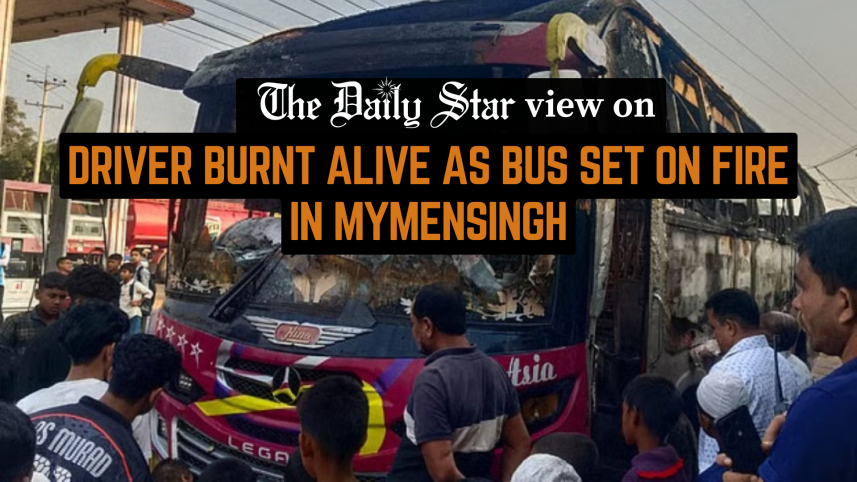


A recent surge in political violence has sparked concerns among the public. The tragic death of Julhas Mia, a bus driver in Mymensingh, who was set on fire in his vehicle early Tuesday, marks a disturbing shift from property damage to fatal attacks on innocent civilians. The capital city has also witnessed crude bomb explosions and arson incidents concurrently, indicating a troubling trend leading up to the upcoming February election that needs urgent collective attention.
Tensions are high as the International Crimes Tribunal is set to announce the verdict date for a case involving former prime minister Sheikh Hasina on November 13. In preparation, authorities have heightened security measures, with police headquarters instructing all stations in Dhaka to increase patrols and surveillance. Key infrastructure and religious sites nationwide are also receiving enhanced protection. The Dhaka Metropolitan Police and Rapid Action Battalion have initiated a large-scale search operation to apprehend those responsible for the violence, yet incidents continue in various areas.
Despite a ban on political activities, the Awami League’s call for a “Dhaka Lockdown” is exacerbating the situation. While political expression is a fundamental right, it should not endanger lives or public order. The party must refrain from violence and allow the legal system to proceed accordingly.
Home Adviser Jahangir Alam Chowdhury reiterated on Tuesday that security and intelligence agencies are working in tandem. Security patrols have been bolstered at critical sites, including the metro rail, railway stations, and notably, the tribunal premises, to instill public confidence. The adviser has stressed the importance of acting promptly on credible threat intelligence and advocated for stricter judicial processes to prevent easy bail for individuals accused of “terrorism.” While this stringent approach may curb immediate threats, there are concerns about potential judicial politicization.
The current security measures extend beyond addressing immediate risks and are integral to ensuring a peaceful democratic transition during the upcoming election. The interim government is employing a combination of visible security presence, coordinated intelligence efforts, and a zero-tolerance policy on political unrest to navigate this volatile period. Bangladesh’s dynamic landscape underscores the need to prevent the escalation of instability, as recent violence serves as a stark reminder of the consequences. At this crucial juncture, all political parties must show restraint, while the government must uphold law and order steadfastly.