
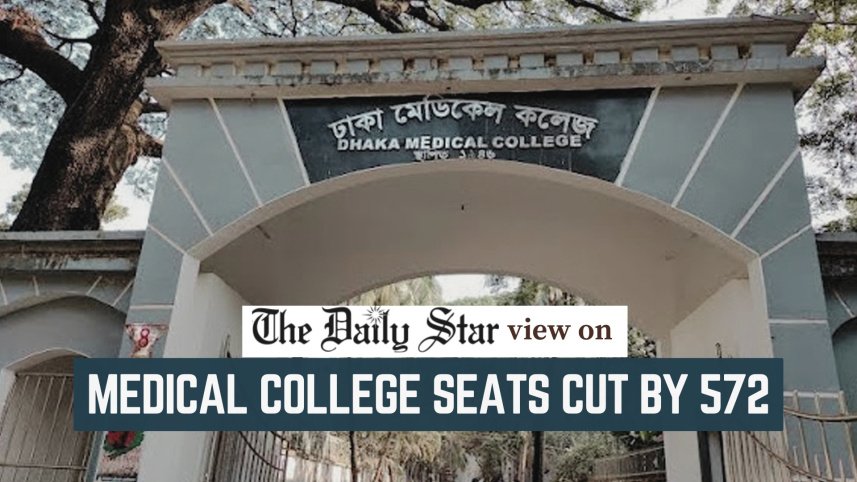


The recent reduction in seat numbers at both public and private medical colleges by the government is seen as a strategic step to tackle the ongoing challenges in maintaining high-quality medical education standards. As per the latest 2025–26 admission circular, a total of 572 seats have been slashed, with 5,100 seats in 37 government medical colleges (previously 5,380) and 6,001 seats in 66 private medical colleges (previously 6,293). The decision was reportedly made by the health ministry following a thorough evaluation of various factors such as infrastructure, teacher-student ratio, and hospital facilities across all medical colleges. While the government’s effort to enhance educational quality is praiseworthy, questions have been raised regarding the approval of a new private medical college with 50 seats.
Both public and private medical colleges in the country have been grappling with multiple issues over the years, notably a significant shortage of teaching staff. Recent findings indicate that 43 percent of teaching positions in government medical colleges remain unfilled, posing a significant threat to medical education. Earlier this year, students from Sher-e-Bangla Medical College in Barishal protested the acute lack of teachers. Habiganj Medical College students have also faced challenges like inadequate classrooms, overcrowding, and a lack of practical training opportunities even after several years. Private medical colleges face more significant hurdles, with many lacking the necessary infrastructure and resources for effective academic activities.
In the previous term, the government increased seat numbers by 1,030 for the 2023–24 session, a move that drew widespread criticism. Additionally, several new colleges were established during the Awami League’s 15-year rule. Following the change in administration last year, plans were announced to rationalize seat allocations to uphold academic quality, making the reduction in seats a long-awaited decision. This year, student admissions have been halted at six private medical colleges, a bold move by the authorities.
However, solely reducing seats or suspending enrollments cannot guarantee the quality of medical education. It is imperative for the government to address the persistent shortage of teachers, enhance infrastructure and laboratory facilities, and provide necessary resources to support both students and faculty. Furthermore, stringent enforcement of academic standards is crucial to ensure that graduates receive comprehensive training. Implementing such holistic measures is vital for the country to establish a robust healthcare system and maintain the credibility of its medical education sector.