
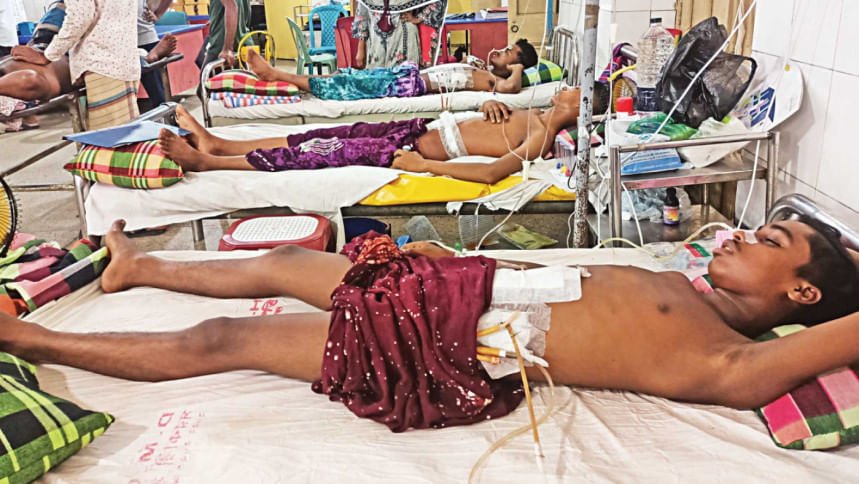


A recent study revealed that deceased and injured individuals affected by the July mass uprising encountered numerous obstacles, totaling at least 20, in accessing medical care and proper funeral arrangements. The research, titled “July Mass Uprising and Crisis of Health System,” was jointly conducted by Bangladesh Health Watch and Eminence Bangladesh in collaboration with Sweden Sverige. It was presented at the CIRDAP auditorium, identifying key factors behind the barriers and offering five recommendations.
Ahmed Ehsanur Rahman, a public health researcher, and Shamim Hayder Talukder, CEO of Eminence Bangladesh, unveiled the study findings. Through discussions with various stakeholders and analysis of media reports, the study highlighted challenges in seeking medical assistance, receiving effective treatment, and conducting funeral rites.
The study outlined multiple hurdles faced by injured victims, including fear of persecution, mobility restrictions, transportation breakdowns, and lack of support. Moreover, issues in hospital treatment were identified, such as denied admissions, inadequate care, resource shortages, and ethical breaches. Challenges during the last rites process involved body identification, police interference, delays in autopsies, and administrative hurdles.
Ehsanur Rahman emphasized three primary reasons for these obstacles: gaps in emergency preparedness, coordination, leadership, and legal support. Shamim Hayder identified four root causes, including the politicization of the health sector and the lack of ethical promotion and acknowledgment of political conflict as a health concern.
The study proposed five recommendations to address the issues, including enhancing medical neutrality, depoliticizing healthcare, improving emergency response, updating medico-legal laws, and ensuring data transparency. Prof M Muzaherul Huq highlighted the inadequacy of emergency medical care in the country, stressing the need for improved facilities and workforce in hospital emergency departments.
Responding to claims of doctors refusing treatment during the uprising, Prof Sayedur Rahman underscored the ethical duty of healthcare professionals and the importance of ethics education in medical schools. He noted that emergency medical care deficiencies were exposed during the events, mentioning plans to introduce an emergency medicine course and enhance ambulance services.
In conclusion, the study exposed the intersection of political and economic factors in the healthcare crisis, emphasizing the need for comprehensive reforms to address the underlying issues. Various stakeholders, including journalists, representatives from international organizations, and injured victims, shared insights during the event.