
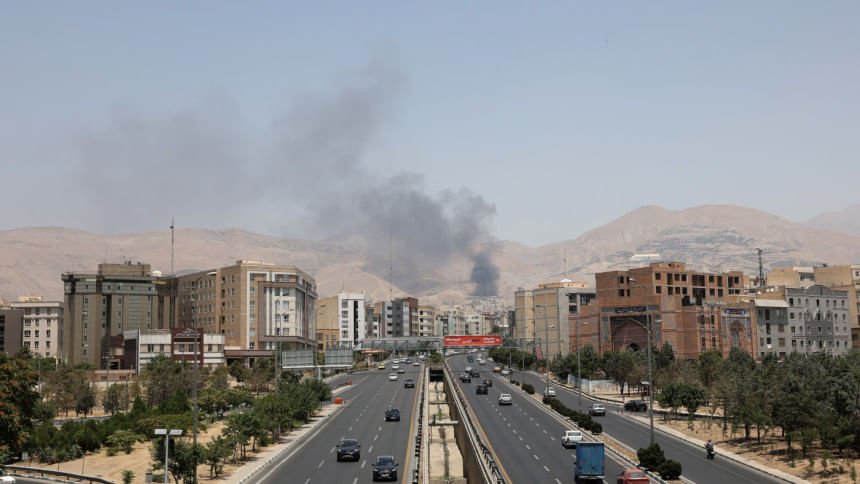


Iran’s recent 12-day conflict with Israel has revealed a critical vulnerability for the country. The war resulted in over 600 deaths and almost 4,800 injuries on the Iranian side due to Israeli strikes, while retaliatory bombings by Iran caused about 30 casualties in Israel. However, the most concerning aspect of the conflict is not the casualty numbers or the destructive weaponry used, but rather the infiltration of Tehran’s security systems by Israeli intelligence. The case of Catherine Perez-Shakdam, a French journalist who reportedly spent years infiltrating Iran’s top circles, underscores this significant vulnerability.
Perez-Shakdam managed to infiltrate elite circles by gaining the trust of high-ranking government and military officials’ wives through her charm. Regardless of whether the allegations of her being a Mossad operative are accurate, her story exposes a key weakness in Iran’s security system. Reports suggest that Mossad operatives smuggled precision-guided weapons and established a drone base near Tehran, targeting air defenses and ballistic missile launchers, severely hindering Iran’s ability to mount a counterstrike.
The primary vulnerability of Iran does not lie in its outdated military equipment or its isolated economy, but in the nature of its authoritarian regime. When a government rules through fear and oppression, it inadvertently creates conditions for its own downfall. The regime’s oppressive tactics have fueled resentment among the population, making citizens potential assets for foreign intelligence agencies. In a system where surveillance replaces trust and loyalty is coerced, rather than earned, national security foundations are compromised.
While not all dissatisfied Iranians are potential spies, the regime’s crackdown on dissent has created a pool of individuals open to foreign recruitment. The government’s brutal treatment of its citizens has led to deep social discontent, as highlighted in films like Mohammad Rasoulof’s “The Seed of the Sacred Fig” and Maryam Moghaddam and Behtash Sanaeeha’s “My Favourite Cake.” These films portray the yearning of Iranians for the freedoms they once enjoyed and the government’s suppression of such desires.
The strategic fault line in Iran-Israel relations goes beyond military capabilities; it delves into the legitimacy of the regime. Iran’s authoritarian rule, marked by human rights violations and restrictions on freedoms, has alienated a significant portion of the population, making them vulnerable to external influences. The regime’s reliance on fear and control has hindered its ability to adapt to change and utilize the talents and loyalty of its citizens, ultimately jeopardizing national security.
In an era where legitimacy and public support play a crucial role in national security, Iran’s authoritarian system stands on shaky ground. The government’s oppressive measures have fostered an atmosphere of fear and resentment among the populace, rendering them susceptible to foreign recruitment. By failing to trust its own citizens and stifling dissent, the regime has left the country exposed to significant security threats, potentially leading to its own demise.