
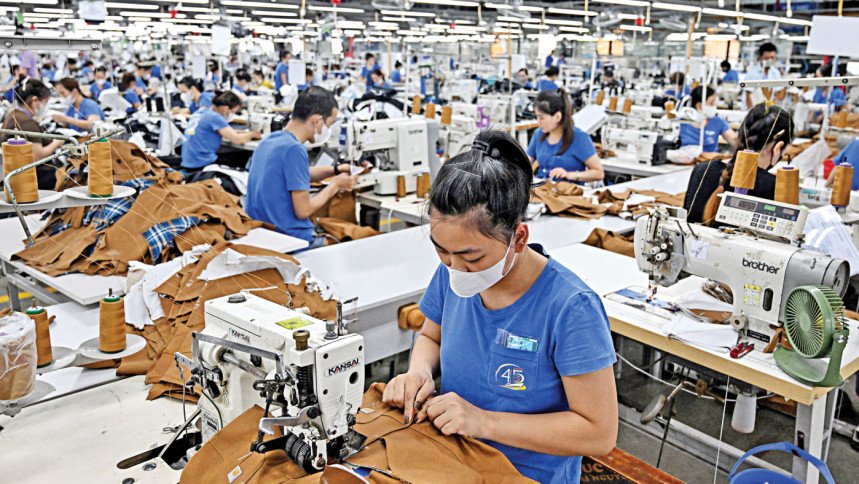


Vietnam’s textile and garment sector has displayed strong signs of recovery in 2025, bouncing back following a challenging period of stagnation. Nevertheless, businesses within the industry are still grappling with increasing hurdles, ranging from elevated capital and logistics expenses to mounting pressure to incorporate eco-friendly practices and navigate evolving trade regulations.
As per Vũ Đức Giang, the chairman of the Vietnam Textile and Apparel Association (VITAS), the industry’s export revenue surged to US$34.75 billion in the initial nine months of 2025, reflecting a 7.7 percent year-on-year growth. This resurgence underscores the resilience of Vietnam’s textile exports in the global marketplace.
Despite the progress, the sector heavily relies on imported raw materials, with import expenses totaling $16 billion, including $11 billion solely for fabric procurement. This reliance poses significant risks, particularly amidst shifting global trade dynamics.
Vietnam has ascended to the third position worldwide in textile and garment exports, a substantial leap from its previous role as a low-cost manufacturing hub. Giang highlighted that high-value-added goods are increasingly contributing to exports, signaling the industry’s shift from pure contract manufacturing towards brand development and innovation.
Vietnamese textile and garment items are presently shipped to 138 nations, bolstered by 16 free trade agreements (FTAs), with expectations to reach 22 by 2027. Emerging markets like the Middle East and Africa present new avenues for growth, according to Giang, with these regions gaining prominence.
In 2024, exports to Islamic nations alone reached $1 billion, and by July 2025, revenue from the Middle East had already hit $700 million. Vietnamese enterprises are also targeting premium segments, offering products with enhanced design and technological features to bolster long-term competitiveness.
One of the primary challenges is production costs, which are approximately 40-45 percent higher in Vietnam compared to countries like Indonesia, Malaysia, and Myanmar, despite Vietnamese labor being around 40 percent more efficient. On a positive note, the industry is swiftly adopting automation and eco-friendly technologies, ranking second only to China in regional supply chain modernization.
Nonetheless, logistics pose a bottleneck. According to Đặng Thị Minh Phương, chairwoman of the HCM City Logistics Association, shipping and warehousing expenses have surged. Despite monthly salaries of VNĐ35-40 million ($1,300-1,500), businesses are encountering difficulties in hiring container drivers. She emphasized the necessity for firms to revamp supply chains and invest in logistics technology to enhance competitiveness.
Moreover, the transition from traditional processing models to FOB (Free on Board) and DDP (Delivered Duty Paid) purchasing methods has reshaped the financial landscape. Giang stressed the imperative need for enhanced collaboration between banks and exporters, urging banks to provide tailored credit packages aligned with modern contract terms.
Addressing trade policy concerns, the US levied a 20 percent reciprocal tax on Vietnamese textile and garment products, significantly impacting export dynamics. While demand remained steady in the initial nine months of 2025 as customers rushed to place orders before the tax implementation, new orders from the US have since plummeted. With buyers now requiring Vietnamese producers to absorb a portion of the tariff cost, profit margins are shrinking.
Furthermore, US authorities have hinted at potential tax hikes on products lacking clear origin documentation, aiming to prevent origin evasion via transit routes – a caution to Vietnamese firms re-exporting merchandise from China. Additionally, Vietnam presently imports all of its cotton and up to 95 percent of its synthetic fibers, with chemicals and dyes also predominantly imported. The lack of domestic input production poses a significant vulnerability, particularly under stricter origin regulations and evolving trade policies.
To mitigate risks, industry leaders advocate for enhanced localization of raw materials, ensuring traceability, and minimizing exposure to foreign supply disruptions. Despite the industry’s export achievements, brand development remains a persistent weakness.
“Cao Hữu Hiếu, the general director of Vinatex, remarked that Vietnamese fashion brands are still nascent and relatively small, with international brands dominating even in the domestic market.” Major global brands heavily invest in design talent, a facet currently lacking in Vietnam. Establishing a robust brand identity, especially in the fashion sector, necessitates a long-term commitment to training, design, and product distinctiveness.
While Vietnam has made progress in automation, its overall productivity lags behind other leading textile producers in Asia and Europe. Investments in modern machinery, smart factories, and automation are deemed vital to sustaining competitiveness. Hiếu outlined Vinatex’s strategic objective to evolve into a comprehensive solutions provider for sustainable fashion – spanning yarn and fabric to finished garments. The company aims to concentrate on sustainable, circular, and recycled products, aligning with global trends in eco-conscious consumption.