
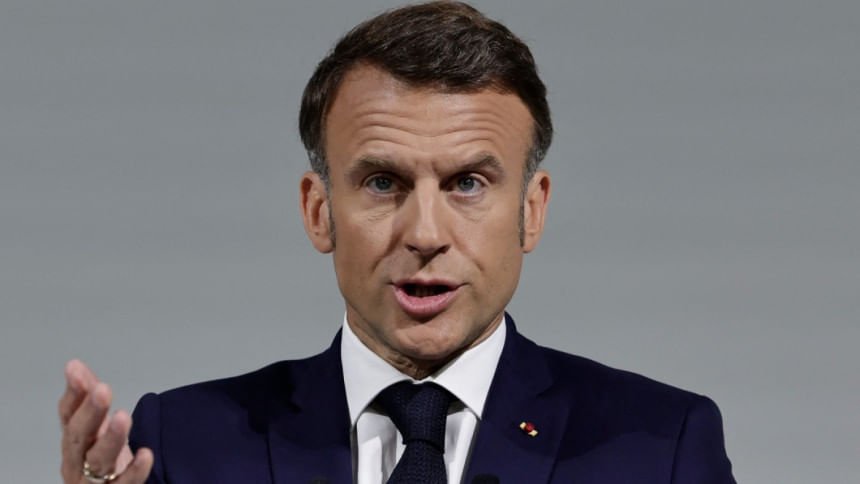


French President Emmanuel Macron is in a race to appoint a new prime minister within a two-day timeframe following the resignation of outgoing premier Sebastien Lecornu, which has further plunged the country into a political crisis. The presidency announced on Wednesday that Macron would announce the new prime minister within the next 48 hours, indicating that the appointment is expected by Friday evening at the latest.
Lecornu, in an interview with French television, expressed his belief that a new prime minister would be named to address the crisis instead of opting for early legislative elections or Macron’s resignation. These developments mark the latest events in a series of political turmoil over the past three days that have unsettled France and raised concerns about the stability of the EU member.
Lecornu resigned early on Monday after serving for less than a month, but Macron granted him until Wednesday evening to find a solution to months of deadlock over an austerity budget. The previous two prime ministers were removed by the legislative chamber due to disagreements over the spending plan.
The presidency stated to AFP that the president “will name a prime minister within 48 hours,” indicating that a budget agreement could be reached by the year’s end. While the identity of the new prime minister remains undisclosed, it will be the eighth under Macron’s presidency unless Lecornu is reappointed.
The escalating crisis poses a significant challenge for Macron since taking office in 2017, with key allies distancing themselves from the president, who now appears increasingly isolated. Lecornu informed Macron that the possibility of snap legislative elections had diminished as there was a majority in parliament against dissolution.
Dismissing calls for Macron’s resignation and snap presidential elections, Lecornu advocated for the president to fulfill his mandate until 2027, emphasizing the need for a government focused on addressing the country’s challenges rather than political ambitions. He also highlighted the importance of finding a solution to debate the controversial pension reform while cautioning against the high costs of suspension.
As the search for a new premier continues, the challenges faced by Lecornu and his predecessors underscore the complexities of governing under Macron’s administration. The centrists, in a de-facto coalition with the right-wing Republicans, lack a majority in parliament, leaving any new prime minister vulnerable to potential ousting if the left aligns with the far-right National Rally.
Marine Le Pen’s party plans to obstruct the actions of any new government and has eyes set on the 2027 presidential elections, seeing an opportunity to seize power. The Socialists, crucial to Macron’s political strategy, remain uncertain about supporting the pension reform, signaling ongoing challenges for the new premier.